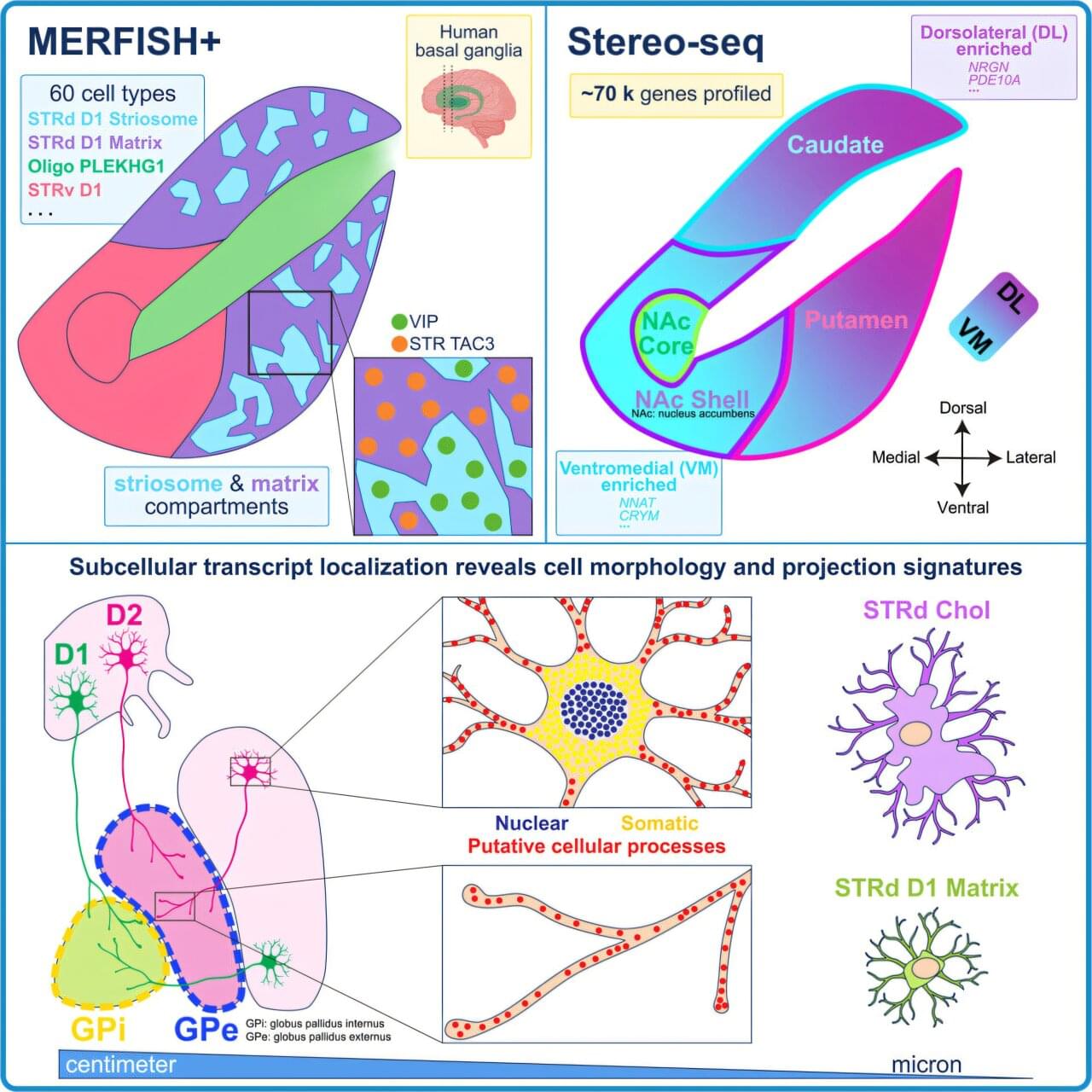
University of California, Irvine researchers have mapped approximately 8 million cells in regions deep within the human brain, identifying 60 distinct types and revealing how they form cellular communities. The work offers a foundational reference for investigating brain systems affected by Parkinson’s disease, Huntington’s disease and other neurological and psychiatric disorders.
The atlas focuses on the basal ganglia, a group of interconnected structures involved in movement, motivation, habits and decision-making. By examining both the molecular characteristics of cells and their locations, scientists are building a more precise picture of how these areas are organized and creating a basis for exploring what changes in disease.
The study, published in Cell, is one of two led by UC Irvine’s Center for Neural Circuit Mapping in a coordinated publication package from the BRAIN Initiative Cell Atlas Network. The university’s team also contributed to four additional Cell papers on brain cells’ molecular features and their similarities across species.