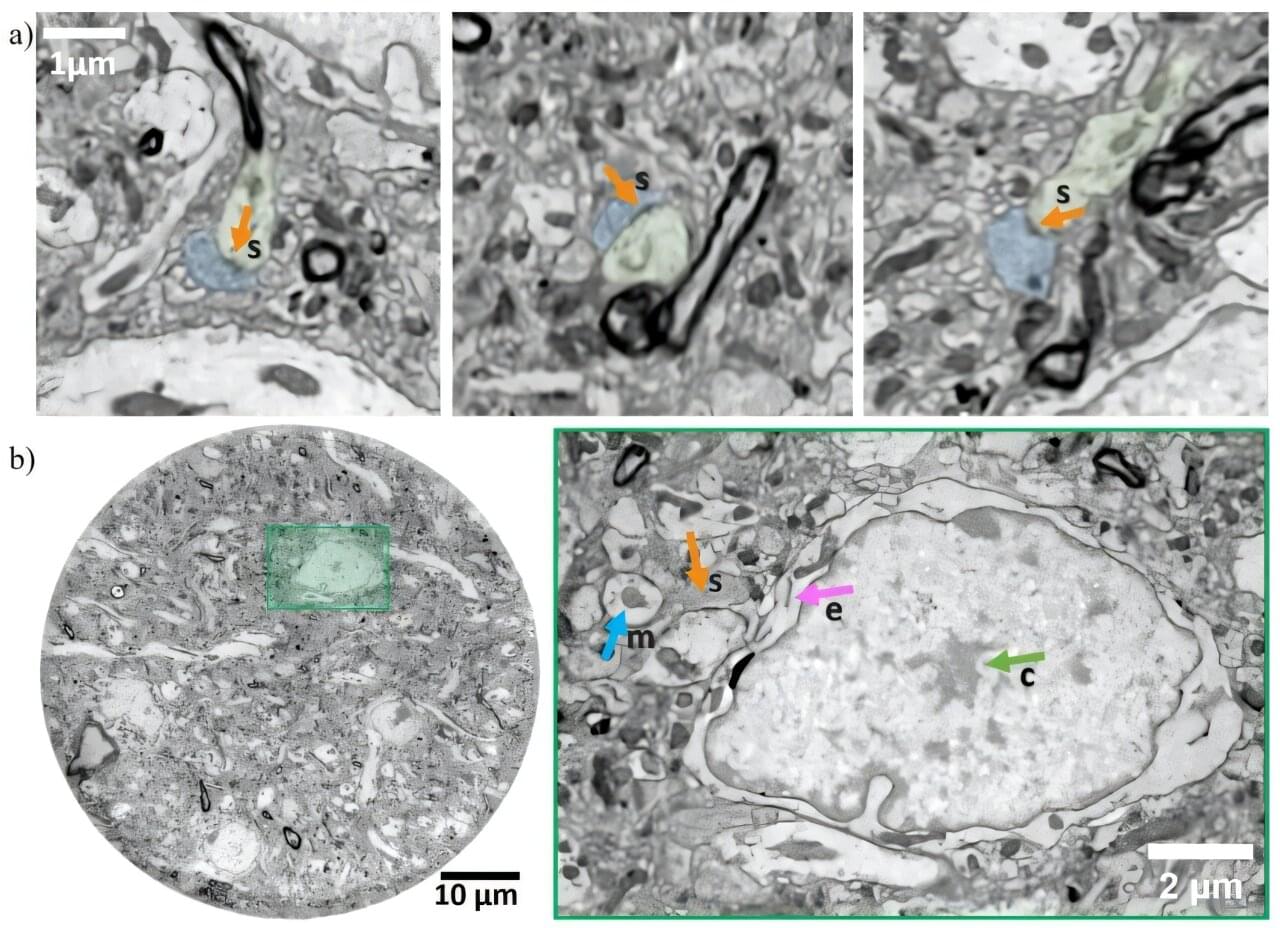
In an international collaboration, researchers have developed a method that produces significantly higher-quality three-dimensional X-ray images than previously possible. The technique is used for 3D imaging with so-called X-ray nanotomography. The researchers’ approach draws on expertise in mathematics and computational science.
“Our work shows that the limitation has not only been in the X-ray optics, but also in the mathematics used to reconstruct the image,” says Marcus Carlsson, a mathematics researcher at Lund University and last author of the paper published in Optica.
The new method can distinguish extremely small structures down to 20 nanometers in size. By comparison, a human hair is between 80,000 and 100,000 nanometers thick.