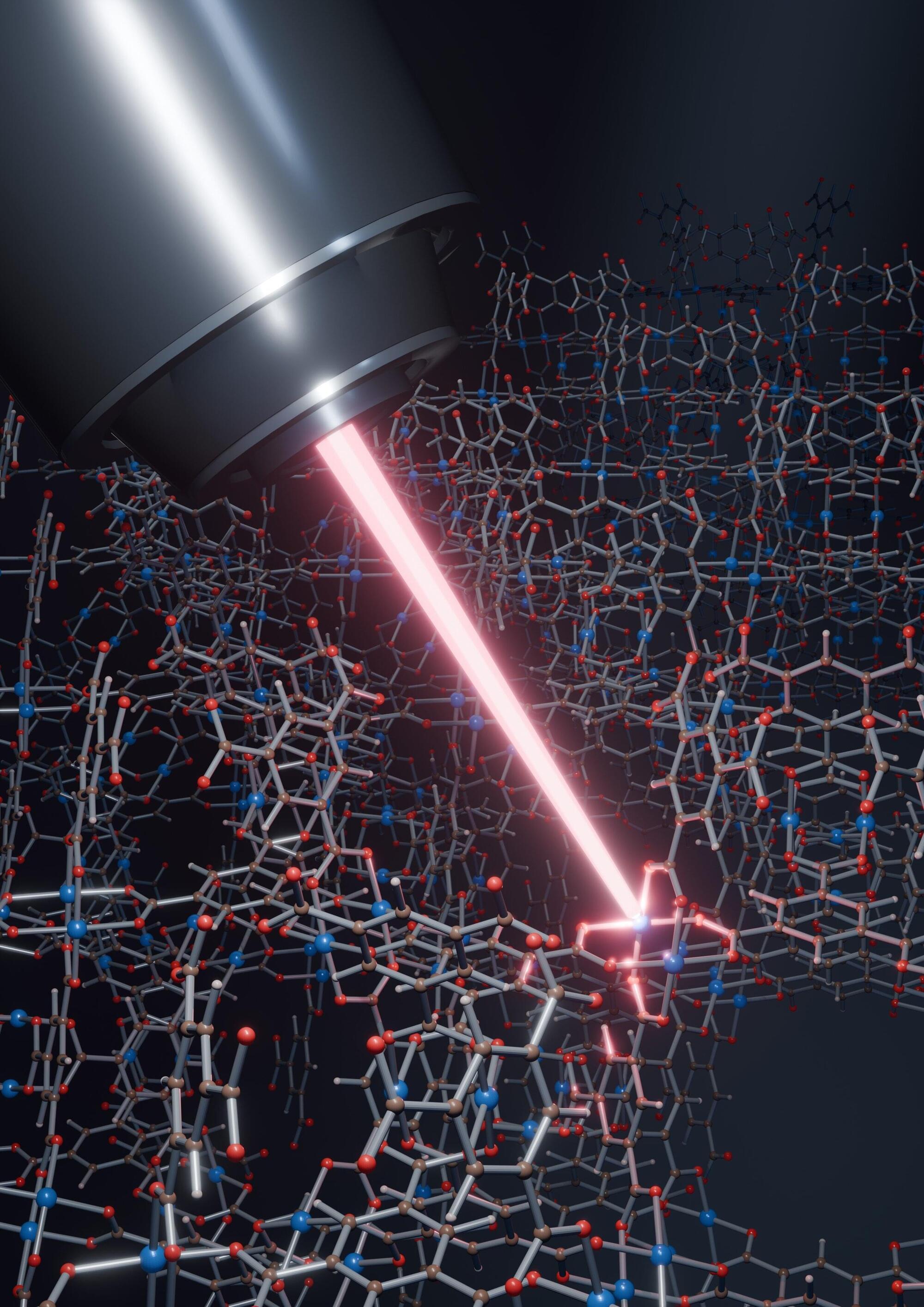
In 1974, the University of Melbourne’s chemistry professor Richard Robson had the idea of replacing the wooden balls and metal rods used in structural models with molecules and chemical bonds. He began experimenting with copper ions linked by a four-armed organic molecule, creating a structure with a cavity. His work laid the foundation for metal–organic frameworks (MOFs), a class of porous materials formed by linking metal ions with organic molecules. Their pores can capture pollutants, support chemical reactions and store gases, giving MOFs a wide range of potential applications.
MOFs exhibit exceptional properties arising from their porous structures that are difficult to achieve with conventional materials, enabling applications such as gas storage, separation and pollutant capture. These unique properties also make MOFs promising candidates for functional devices, such as chemical sensors and electronic devices. However, their delicate structures can be damaged during dry etching, a process that uses energetic particles, such as ion or electron beams, to remove material and create patterns.