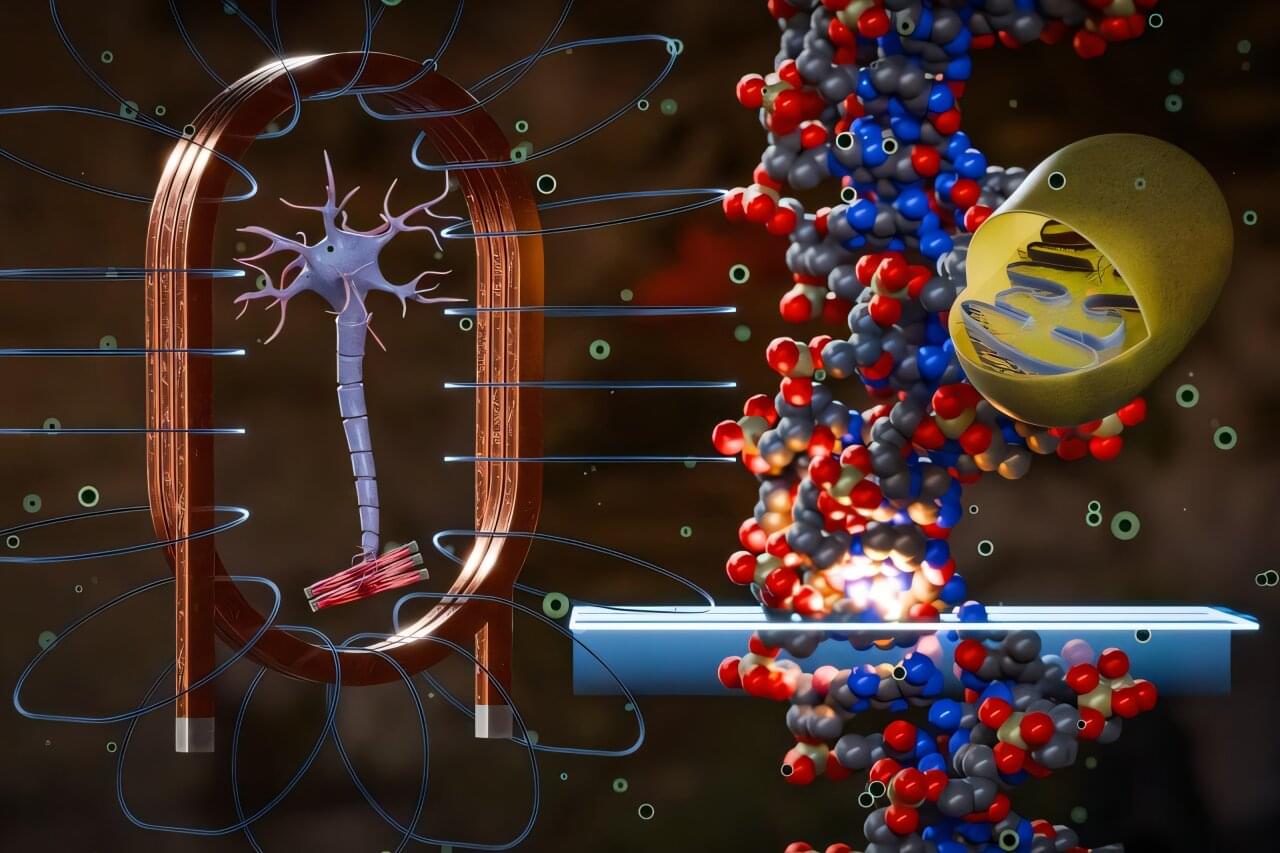
A study led by cell biologist Dr. Arun Pal at the HZDR, in collaboration with research partners in Dresden and Rostock, has found that electromagnetic alternating fields can partially reverse key pathological changes in human nerve cells. The finding has been published in the journal Cells.
In cell cultures of human motor neurons derived from ALS patients, electromagnetic stimulation improved the transport of mitochondria and lysosomes along axons and reactivated processes involved in repairing DNA damage. At the same time, the activity of thousands of genes changed. This research opens up new perspectives for nonpharmacological therapeutic approaches.
In healthy individuals, so-called motor neurons—specialized nerve cells located in the cerebral cortex, brainstem and spinal cord—send signals to skeletal muscles, thereby triggering and controlling movement. In amyotrophic lateral sclerosis (ALS), these neurons become severely damaged and progressively lose their ability to transmit signals. As a result, muscles no longer receive the instructions they need to function and gradually waste away. Problems affecting the arms and legs are often among the first symptoms, although some patients initially develop speech or swallowing difficulties.