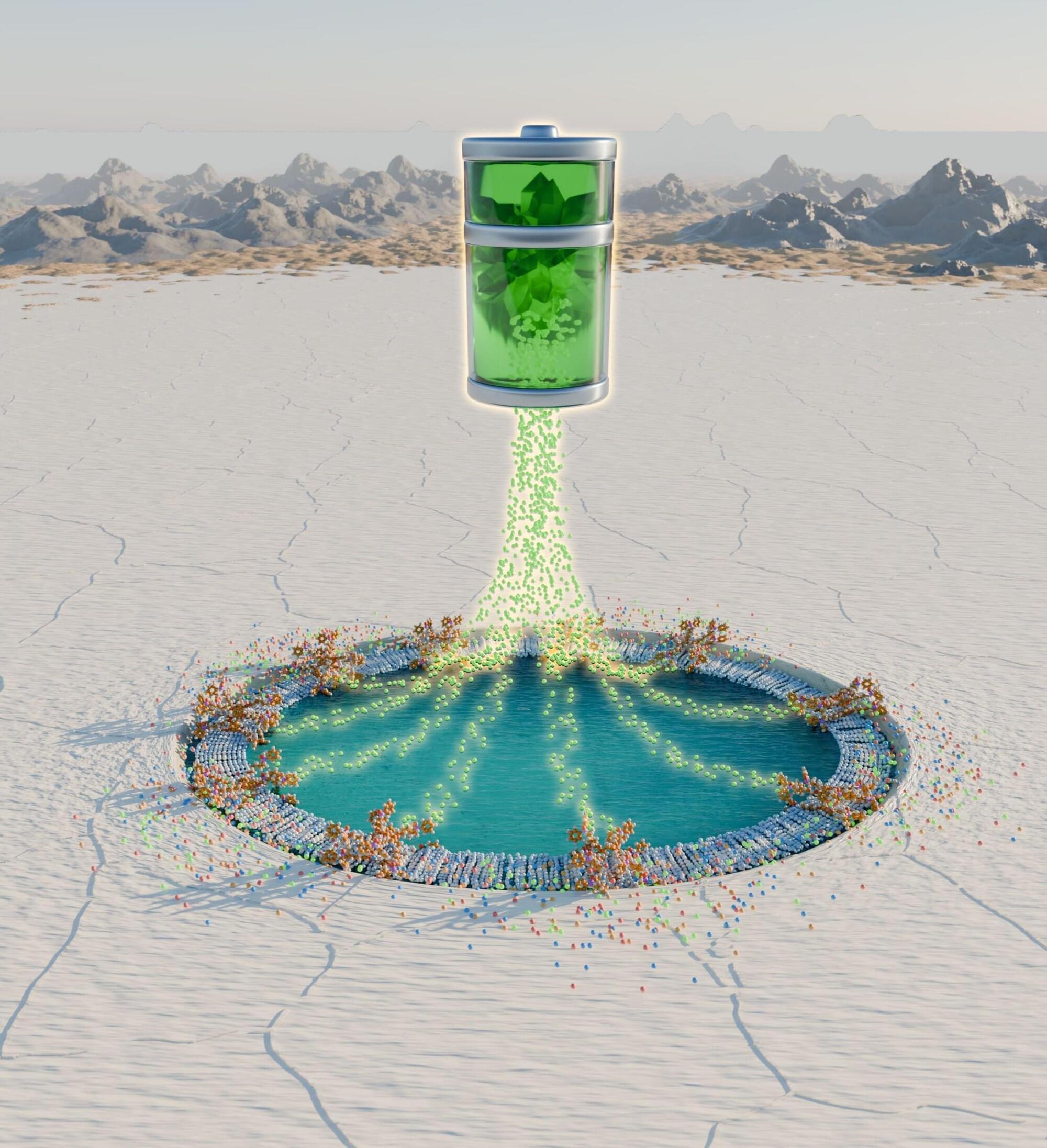
Gathering lithium, a crucial element in batteries for smartphones, electric cars and the electrical grid, is a time-consuming and energy-intensive process, but new technology could make it much easier.
Researchers at The University of Texas at Austin developed a new way to separate lithium from other co-occurring elements, potentially speeding up extraction of this critical element and increasing domestic supply. They developed nanoscale, artificial channels, inspired by the natural doors that let ions and molecules in and out of living cells, that allow lithium to pass through while restricting other competing ions that typically come with it.
These channels, tiny pores that sit inside membranes, were two to five times more selective for lithium compared with other recently developed lithium transporters. The researchers say their channels are among the most selective ever created.