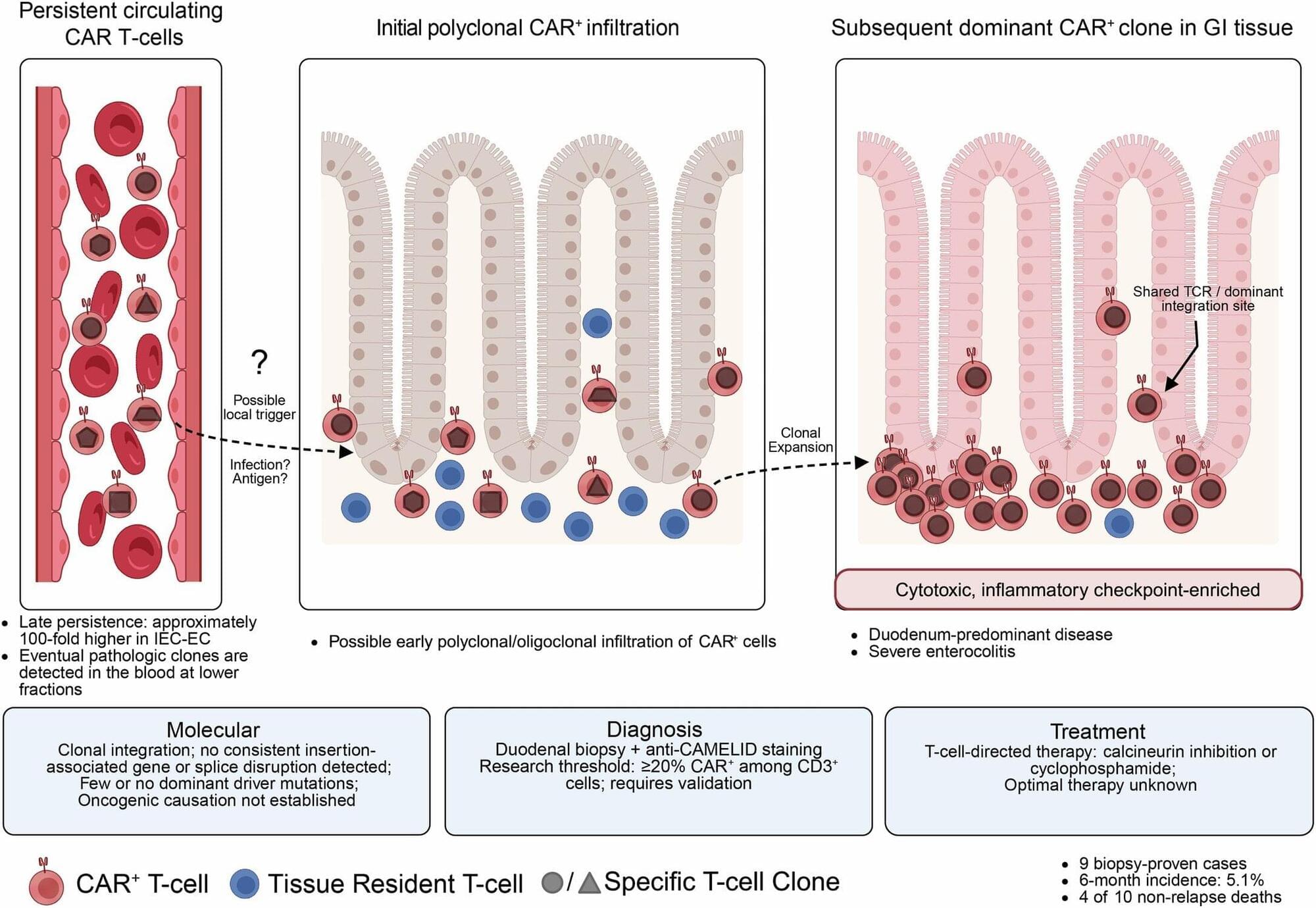
Patients with multiple myeloma who developed a serious gastrointestinal side effect after treatment with chimeric antigen receptor (CAR) T cell therapy had significantly more CAR T cells persisting in their bloodstream, according to new research from The University of Texas MD Anderson Cancer Center.
The findings, published in Nature Medicine, may help clinicians better diagnose and treat affected patients earlier.
Immune effector cell-associated enterocolitis (IEC-EC) is a rare but serious gastrointestinal side effect that can occur in patients after CAR T cell therapy. The complication is associated with severe clinical outcomes, including prolonged hospitalization, need for intensive nutritional support and increased mortality.