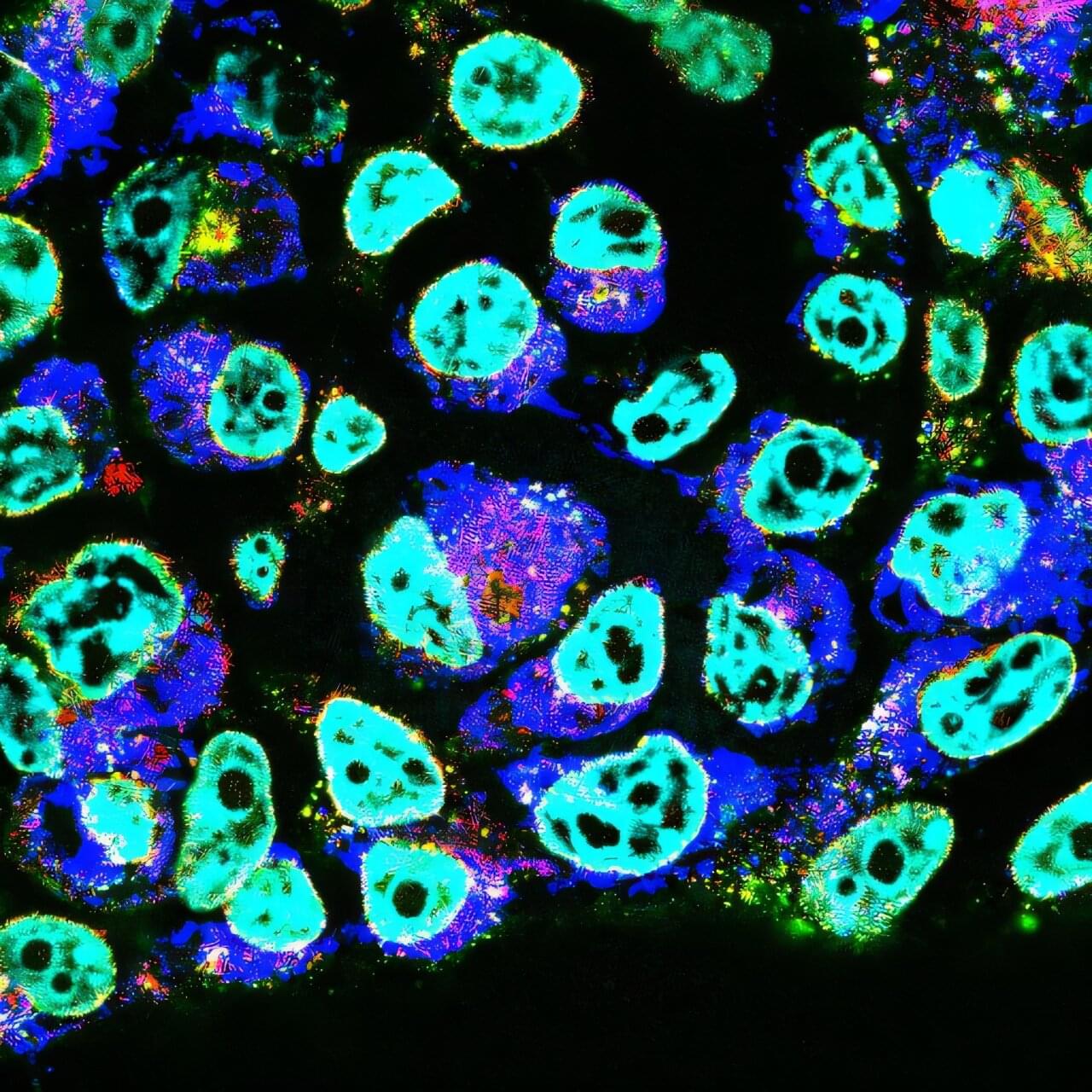
Inside each cell is a dynamic world of molecules and chemicals, signals and receivers, and construction and destruction. With all this activity, it’s inevitable that cellular parts get worn down over time. Thankfully, cells have evolved an efficient recycling process that breaks old parts down to their building blocks, which can then be repurposed and reused. Christina Towers, Ph.D., is an expert on this recycling process, called autophagy.
“The word literally breaks down into ‘auto,’ which means self, and ‘phagy,’ which means eat,” explains Towers, an assistant professor and holder of the Richard Heyman and Anne Daigle Endowed Developmental Chair at Salk. “And it’s a highly conserved process—from plants to humans. We also know that dysfunctional autophagy is linked to many different diseases. To target autophagy in multiple disease scenarios, we must first understand the fundamental biology of it.”
Towers’ latest study, published in Nature Cell Biology, debuts a new tool for understanding this fundamental biology: ASAP (Autophagic SNARE for Abrupt Photomanipulation), a light-based tool that rapidly, precisely and reversibly turns autophagy on and off.