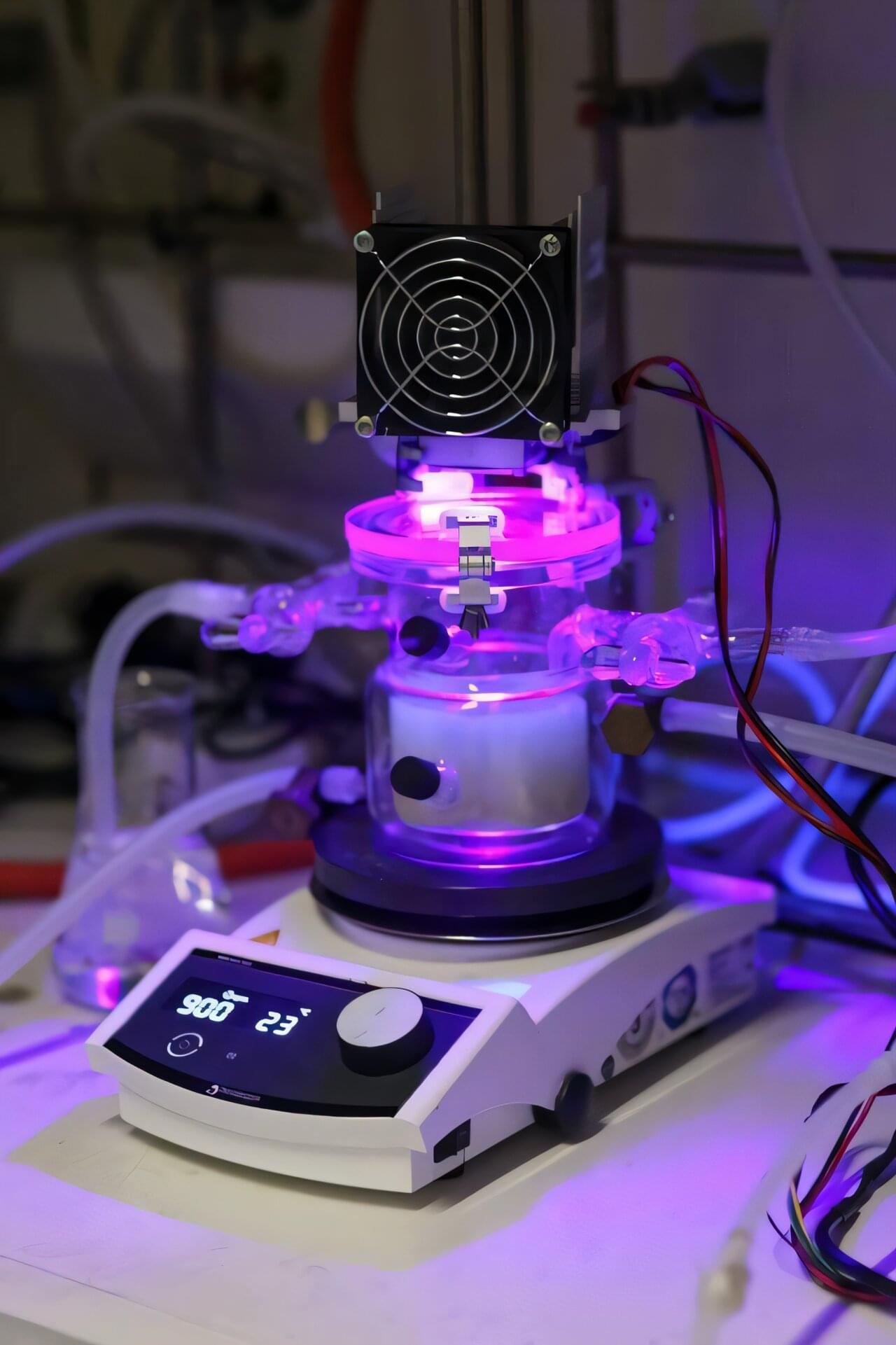
Hydrogen peroxide (H₂O₂) is a versatile chemical feedstock whose industrial production relies predominantly on an energy-intensive process with a substantial environmental footprint. One alternative is to produce it using a catalyst activated by light. In an international research project involving the Max Planck Institute of Colloids and Interfaces, researchers have now developed a synthesis strategy that allows them to precisely control the spatial arrangement of ions in a carbon nitride. The resulting photocatalyst is three times as efficient as conventional green production methods. The findings have been published in Advanced Materials.
Hydrogen peroxide is an environmentally friendly oxidizing agent. When it decomposes, it produces only water and oxygen, which is why it is also known as a “green chemical.” As demand grows, particularly for environmentally friendly wastewater treatment and household and medical disinfection, production volumes continue to rise.
To meet this demand, hydrogen peroxide is still produced predominantly using the so-called anthraquinone process, which incurs high energy costs and has a substantial carbon footprint. Photocatalysis is a promising alternative. In this process, a material absorbs light and uses its energy to drive a chemical reaction without fossil energy. The efficiency of the reaction depends, among other things, on how readily the charges generated by light can move through the material and how long they remain available to drive the reaction.