When completing tasks or acquiring information, humans can be driven by intrinsic and extrinsic motivations. The term intrinsic motivation entails doing something because it is interesting to us or we find it enjoyable, while extrinsic motivation means doing it to obtain a reward, such as money, praise or a good grade.
Psychological theories and past research evidence suggest that these two types of motivations can both improve people’s performance on tasks. However, whether intrinsic and extrinsic motivations impact the mental effort required to complete tasks differently has so far remained largely unclear.
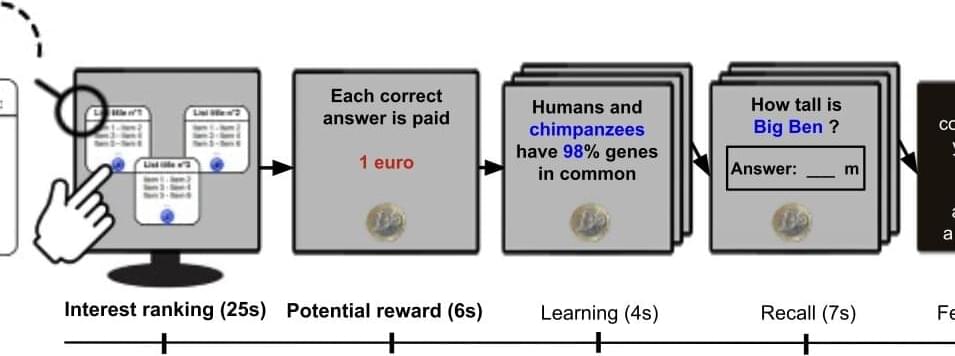
Two researchers at Sorbonne University recently set out to better understand why doing something for pleasure is often perceived as less effortful than doing it to receive a reward. The results of their study, published in Communications Psychology, suggest that while both intrinsic and extrinsic motivations can improve the performance of people in memory tests, enjoying a task may enable its completion with less mental effort than the expectation of monetary rewards.