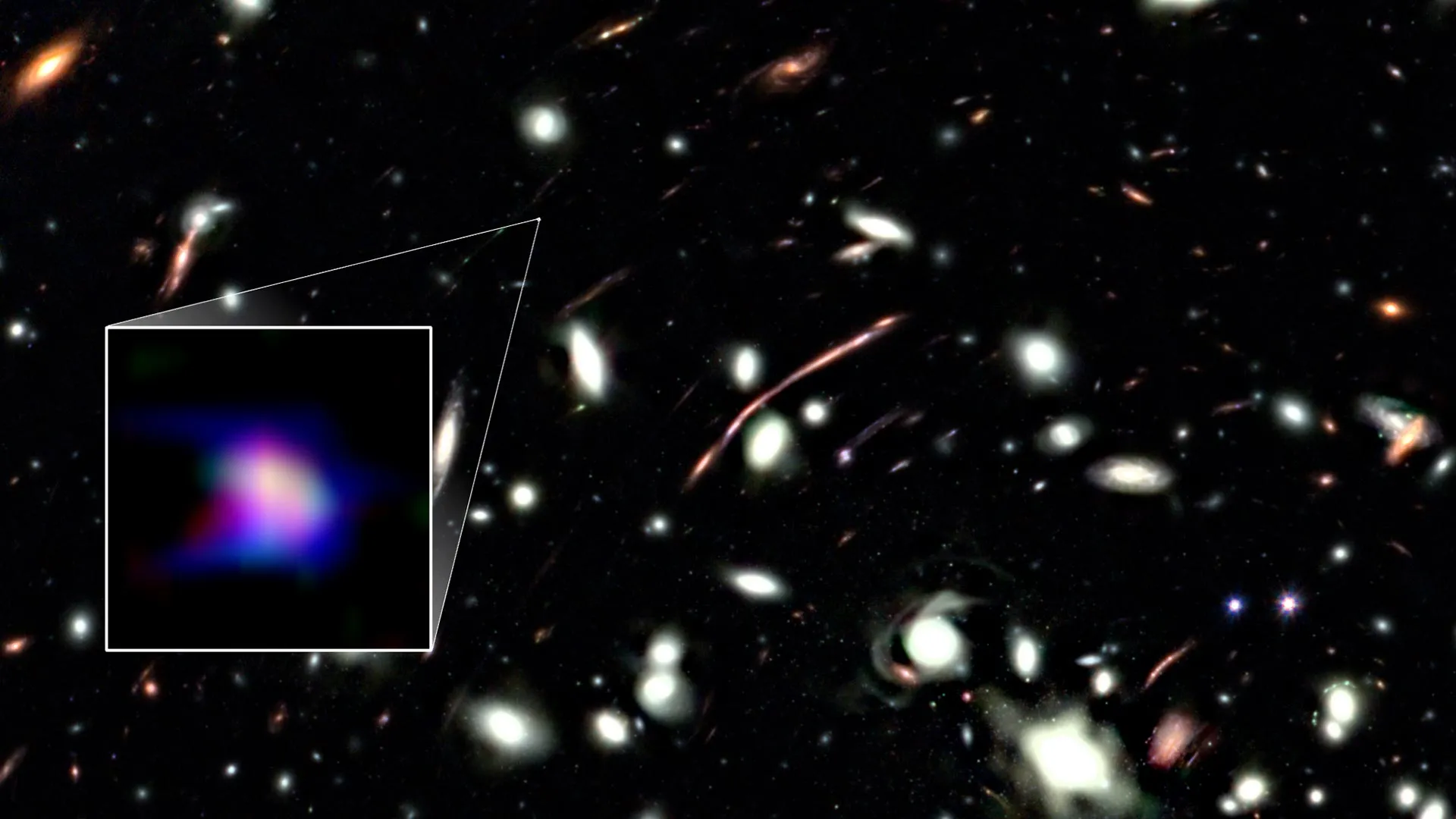
Astronomers using the James Webb Space Telescope have discovered an extraordinarily primitive galaxy from 13 billion years ago that may preserve the chemical fingerprints of the universe’s first stars. The discovery could also solve a long-standing mystery surrounding some of the oldest and faintest galaxies near our Milky Way.
An international research team led by Associate Professor Kimihiko Nakajima of Kanazawa University used Webb and a natural magnifying effect known as gravitational lensing to examine LAP1-B, a tiny, ultra-faint galaxy that existed just 800 million years after the Big Bang.