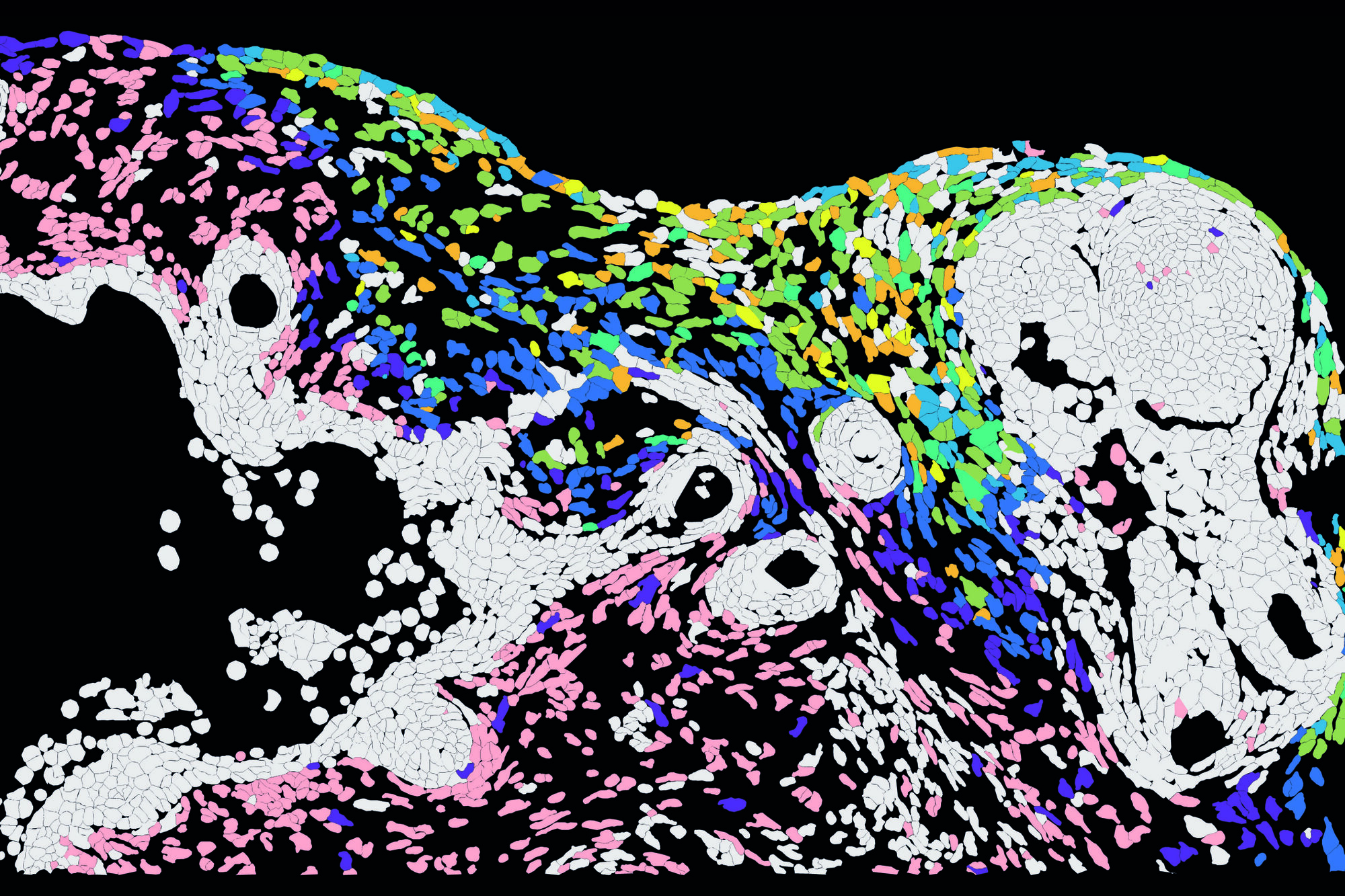
Researchers at the Max Delbrück Center and University Medical Center Hamburg-Eppendorf have traced how herpes simplex virus 1 infection progresses among neighboring skin cells in skin organoids. The work is published in Science Advances.
Most people think of herpes simplex virus 1 (HSV-1) as a mere cosmetic problem: The virus can cause outbreaks of cold sores on the lips or face, which usually heal on their own within two weeks. But HSV-1 infection can be more sinister. The virus infects sensory nerve cells in the face, where it usually remains dormant.
In rare cases, it travels to the central nervous system and causes life-threatening brain inflammation. HSV-1 is also being investigated for potentially playing a role in Alzheimer’s disease—its lifelong persistence in our nervous system may eventually damage nerve cells.