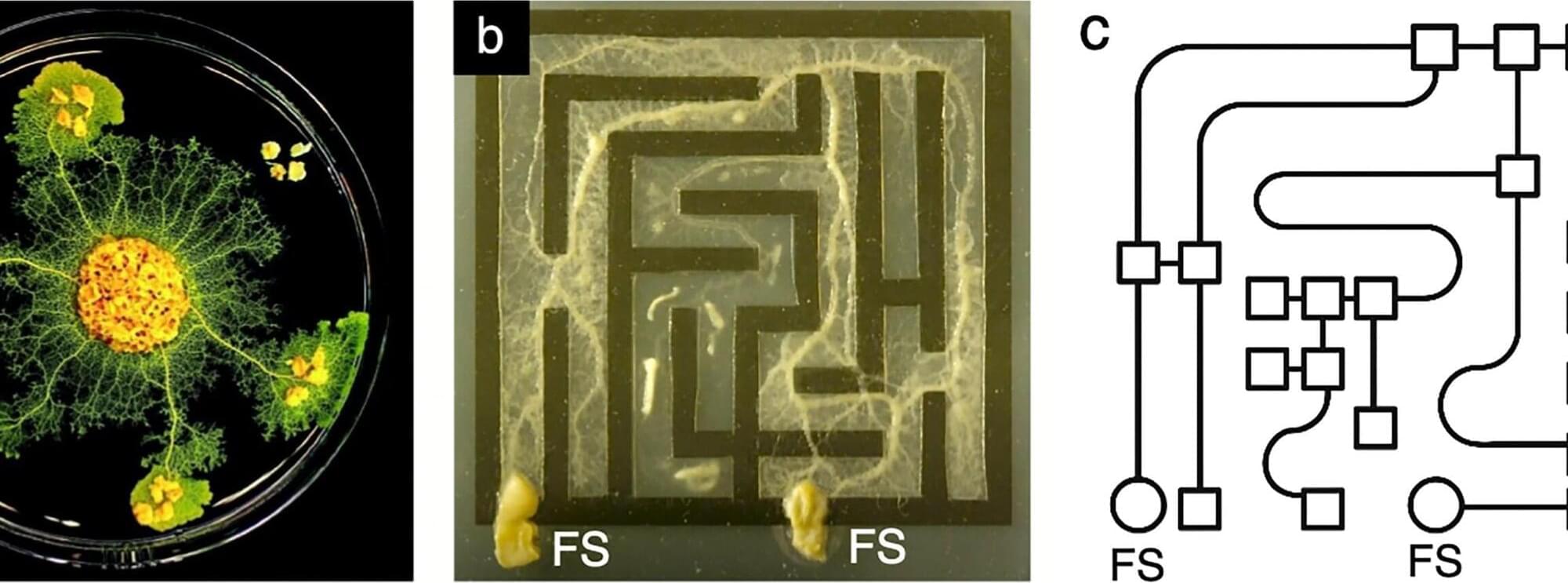
If you watched the single-celled slime mold Physarum polycephalum for a short while, you could be forgiven for thinking that it had some form of intelligence. It can solve mazes, find the shortest routes between food sources and learn from experience. Yet it has no brain or nervous system. So how does it pull that off without a mind to guide it?
A new study published in the Journal of the Royal Society Interface suggests that some of its remarkable abilities can be explained by a basic law of physics known as the principle of least action.
In simple terms, the principle describes how physical systems naturally follow the most efficient path.