Smartwatches worn on millions of wrists today pack vastly more processing power than the computers that helped Apollo astronauts land on the moon. But the scientific drive to go tiny has come at a cost: It means heat, electricity and energy now have much less room to flow through devices.
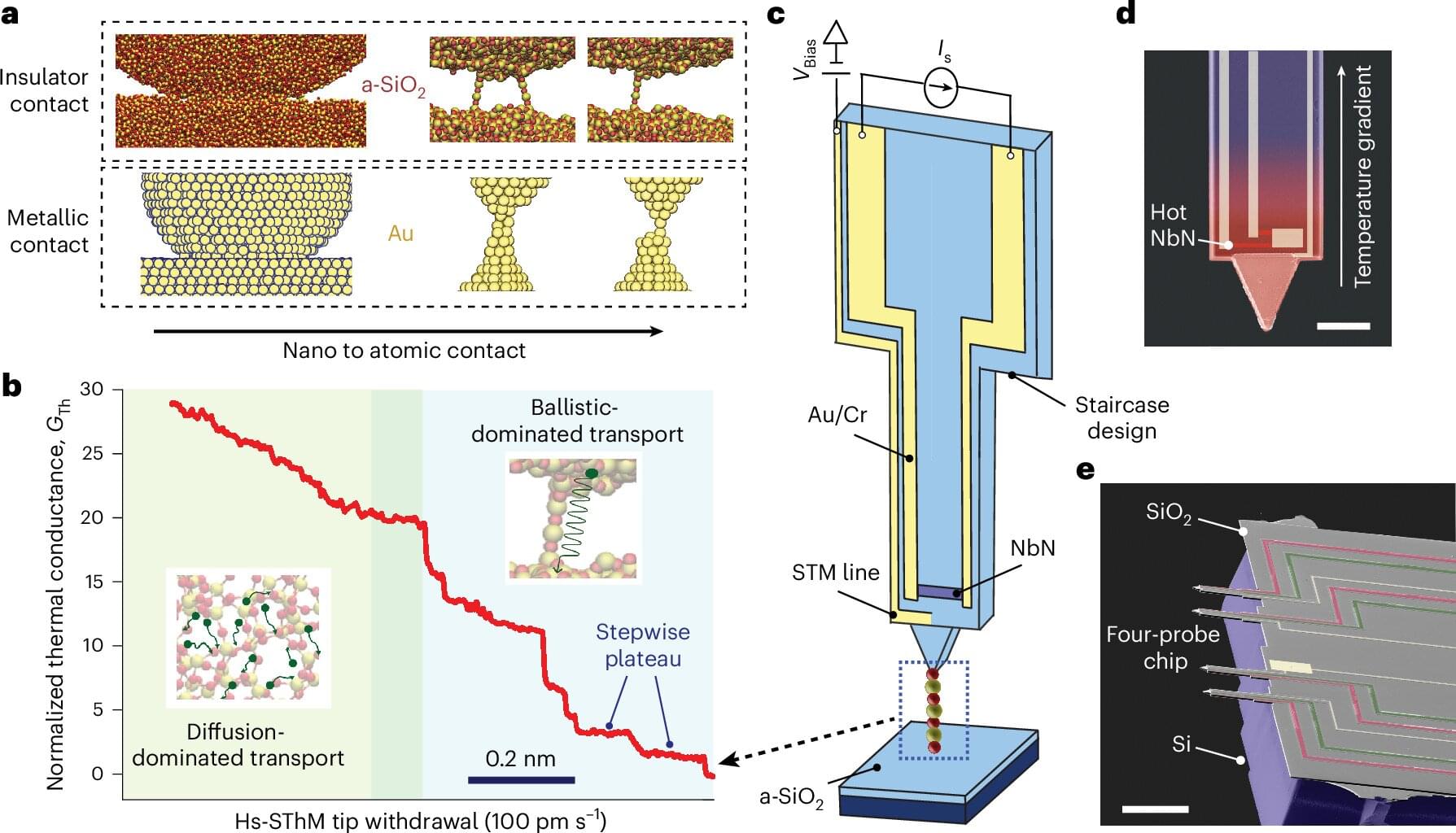
“We will eventually reach a bottleneck to design the next generation of electronic and photonic devices,” said Longji Cui, an assistant professor in the Paul M. Rady Department of Mechanical Engineering at CU Boulder. “Thermal management inside electronic devices is extremely important, but to do it more effectively, we need to understand how heat is flowing through these nanoscale devices.”
Building devices at the tiny nanoscale level will require engineers to better understand how the materials inside them, like glass, behave when they are shrunk to such a small size.