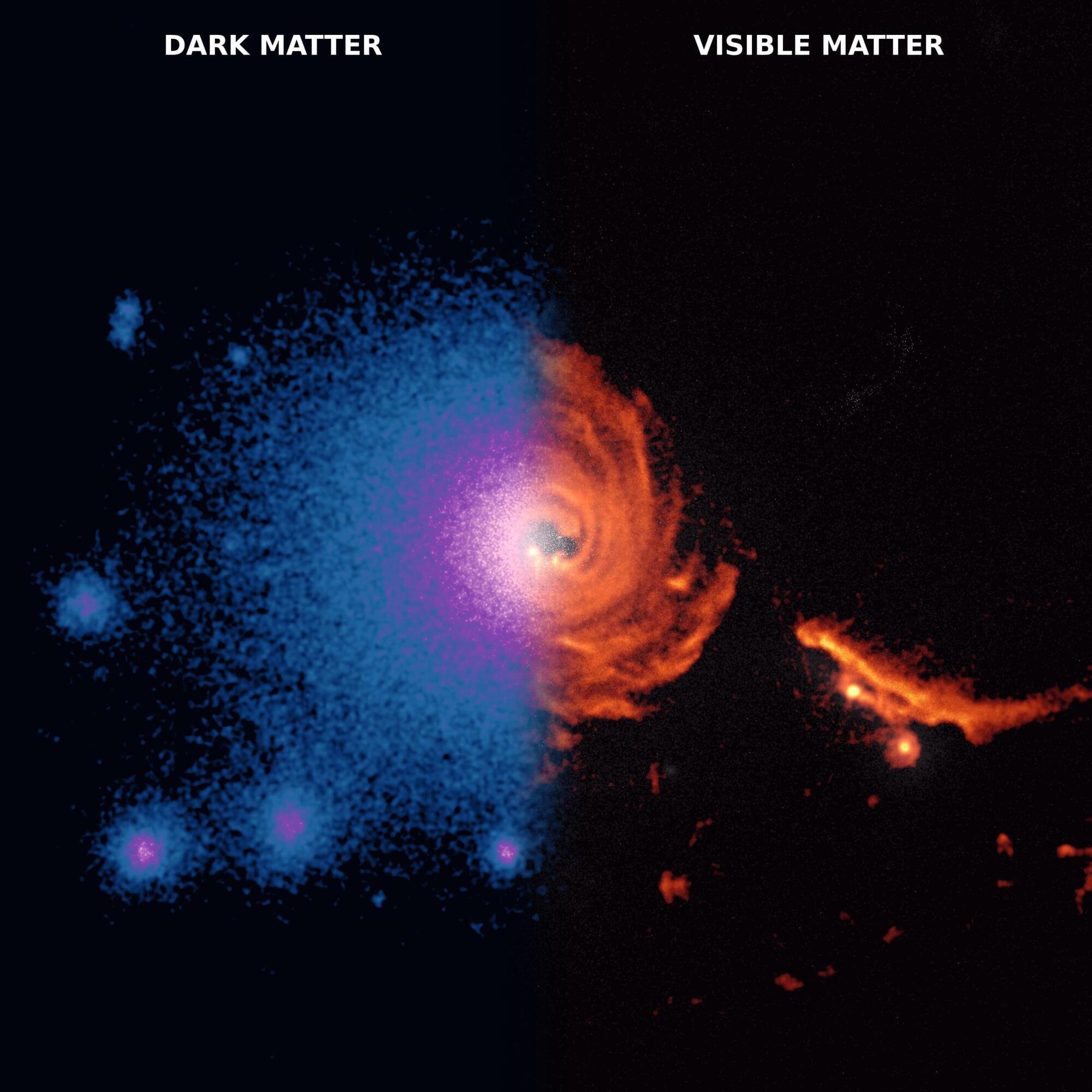
We cannot see or measure dark matter directly. Yet scientists are convinced that it exists and that it accounts for around 85% of all matter in the universe, including the matter that everything here on Earth is made of, from earthworms and mountains to seawater and washing machines.
A wealth of astronomical observations supports the existence of dark matter, but we cannot see it directly because it neither emits, absorbs nor reflects light. What scientists can do, however, is look for its indirect traces. That is what astroparticle physicist Martin Rosenlyst Jørgensen is working on. He holds a Ph.D. in particle physics from the University of Southern Denmark and is now conducting research at the MIT Kavli Institute for Astrophysics and Space Research, U.S.
“If we can identify the fingerprints that different forms of dark matter leave on galaxies and galaxy clusters, we may be able to uncover which fundamental particles and forces are hiding in the dark sector of the universe,” he says.