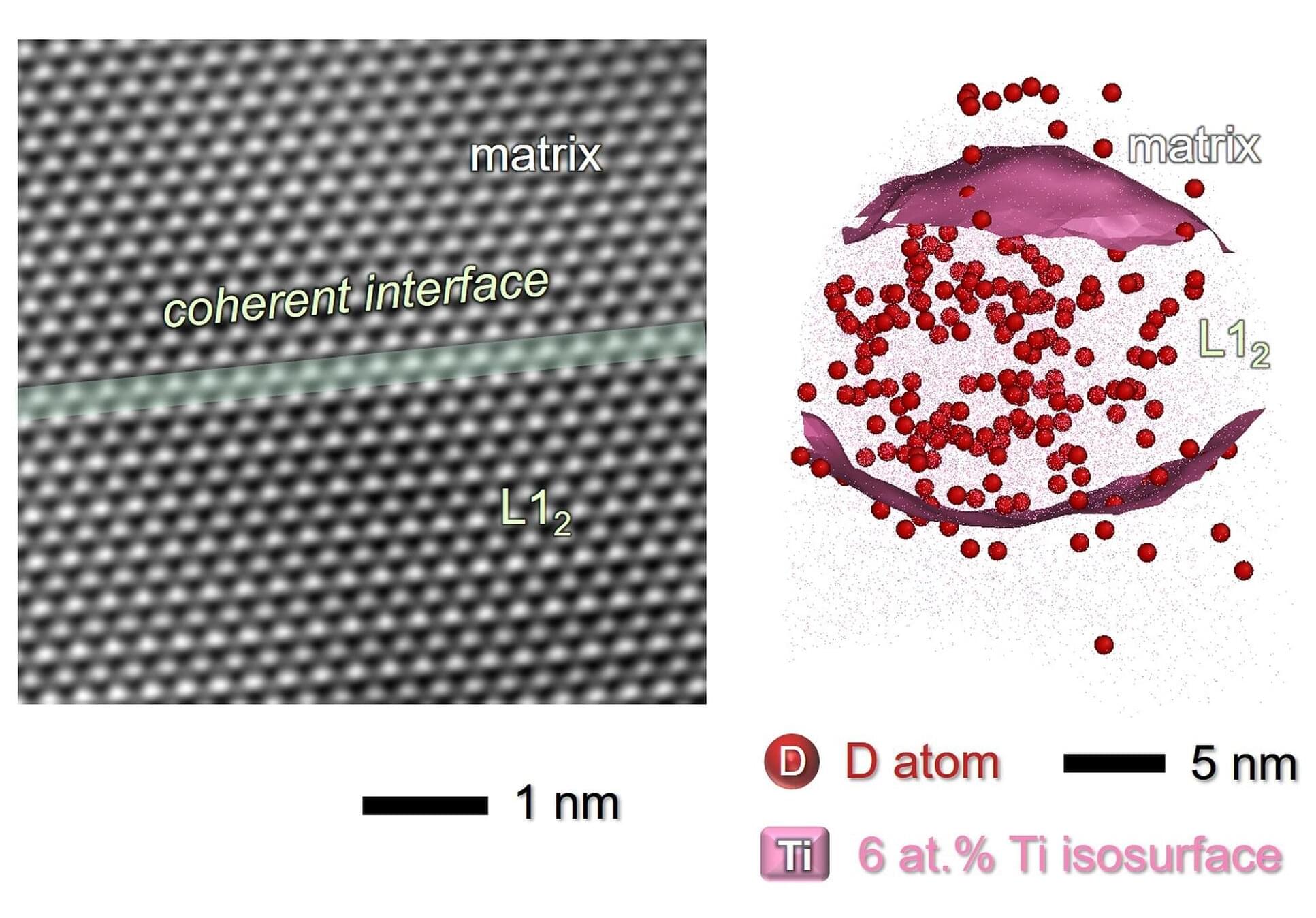
University of Sydney researchers have made a breakthrough by directly observing hydrogen in the tiny spaces between the atoms in metal alloys. The world-first observation of hydrogen dissolving in these ‘metal crystal lattices’ offers fresh insights into why hydrogen can weaken metals and how more hydrogen-resistant materials might be developed.
Hydrogen’s role in a cleaner energy future is well known, but storing and transporting it safely remains a challenge. Hydrogen can enter metal pipelines and storage equipment, sometimes making otherwise strong metals prone to unexpected cracking. This is known as hydrogen embrittlement.
To understand and reduce this risk, scientists need to know how much hydrogen enters a metal, where it goes and how it interacts with the metal from within. But hydrogen atoms are tiny and very mobile, and so observing where they lie within alloys is a holy grail for metallurgy researchers.