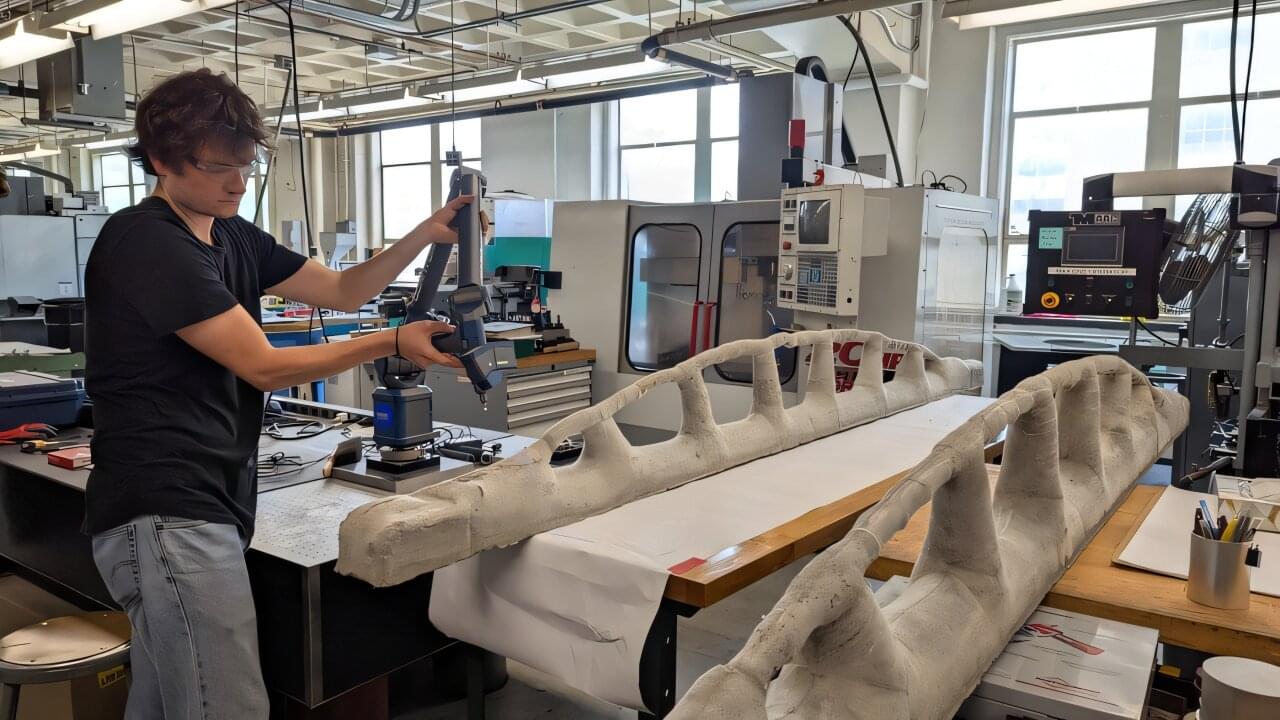
Topology optimization is a computer design method that can help engineers design beams using reduced amounts of concrete and steel. But those intricate shapes produced from the tool are often too complex or expensive to pour into conventional rigid molds. The few that have been built have mostly relied on specialized equipment, such as concrete 3D printers or machine-carved molds, equipment that is out of reach in regions where new construction is expected to grow.
Now, MIT engineers have shown that highly efficient beams can be cast in something more accessible: sewn fabric. In a paper published in the Journal of Building Engineering, the team designed and built a 3-meter (about 10-foot) test beam using fabric molds created through an automated pattern-making process. Compared with a conventional beam designed to carry the same weight, the optimized beam used about one-third as much concrete and half as much steel reinforcement. When tested, its measured response was within about 2% of what the team’s computer model predicted.
Fabric formwork, in which concrete is poured into a mold made of textile, has been explored for years to create beams that vary in depth, rather than the rectangular shapes common in construction. But because fabric deforms under the weight of wet concrete, that flexibility has made the final shape hard to predict.