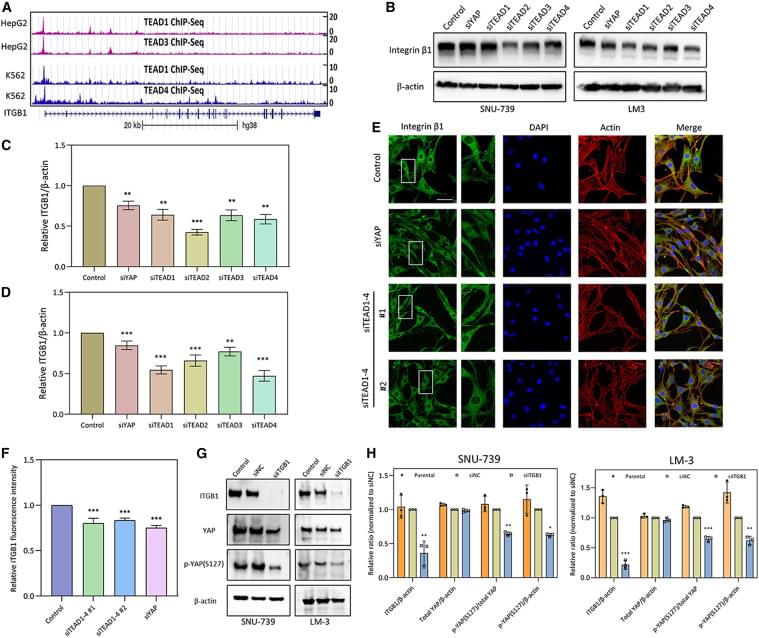
Hepatocellular carcinoma commonly develops in stiff, fibrotic livers, yet how extracellular matrix (ECM) mechanics interact with intracellular feedback to stabilize persistent cancer-associated cell states remains unclear. Here, we investigated whether reciprocal coupling between integrin β1 (ITGB1) and the Yes-associated protein (YAP)/TEA domain transcription factor (TEAD) module can generate a stiffness-sensitive bistable regulatory circuit. Grade-stratified data from The Cancer Genome Atlas Liver Hepatocellular Carcinoma cohort showed positive ITGB1-YAP1 Spearman correlations with r-values of 0.626, 0.724, 0.664, and 0.727 for grades G1–G4, respectively.