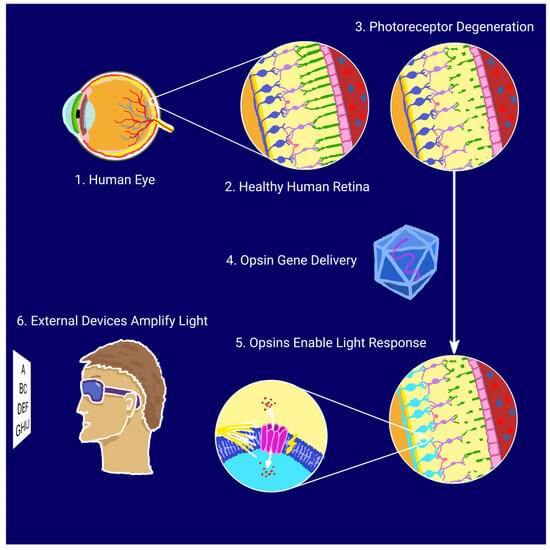
Retinal degenerations, such as age-related macular degeneration and retinitis pigmentosa, present significant challenges due to genetic heterogeneity, limited therapeutic options, and the progressive loss of photoreceptors in advanced stages. These challenges are compounded by difficulties in precisely targeting residual retinal neurons and ensuring the sustained efficacy of interventions. Optogenetics offers a novel approach to vision restoration by inducing light sensitivity in residual retinal neurons through gene delivery of light-sensitive opsins. This review traces the evolution of opsins in optogenetic therapies, highlighting advancements from early research on channelrhodopsin-2 (ChR2) to engineered variants addressing key limitations.