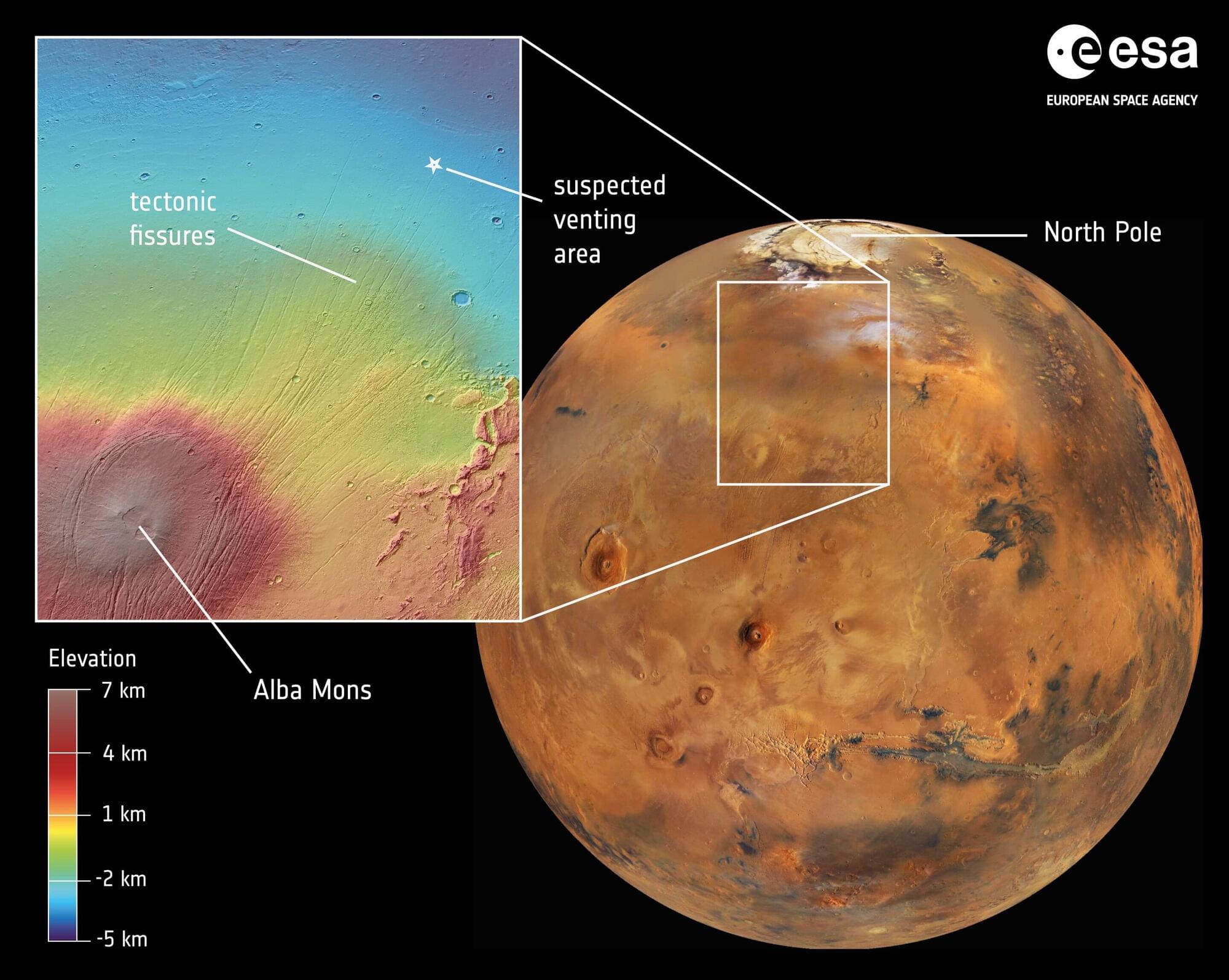
New evidence from gas seeping above volcanic rifts suggests Mars is not geologically dead deep inside, but merely sleeping. Fresh fissures along the Alba Mons region hint at active spots under the surface, where gases from inside the planet may be making their way up to the surface.
An international research team led by Alexander Trokhimovskiy suggests that the release of hydrogen chloride comes from hot magma beneath the surface—a sign of dormant volcanism.
The ExoMars Trace Gas Orbiter (TGO) first reported hydrogen chloride gas in the Martian atmosphere back in 2021. This gas is commonly found escaping from magmatic vents on Earth, leading researchers to wonder whether the same was happening on Mars.