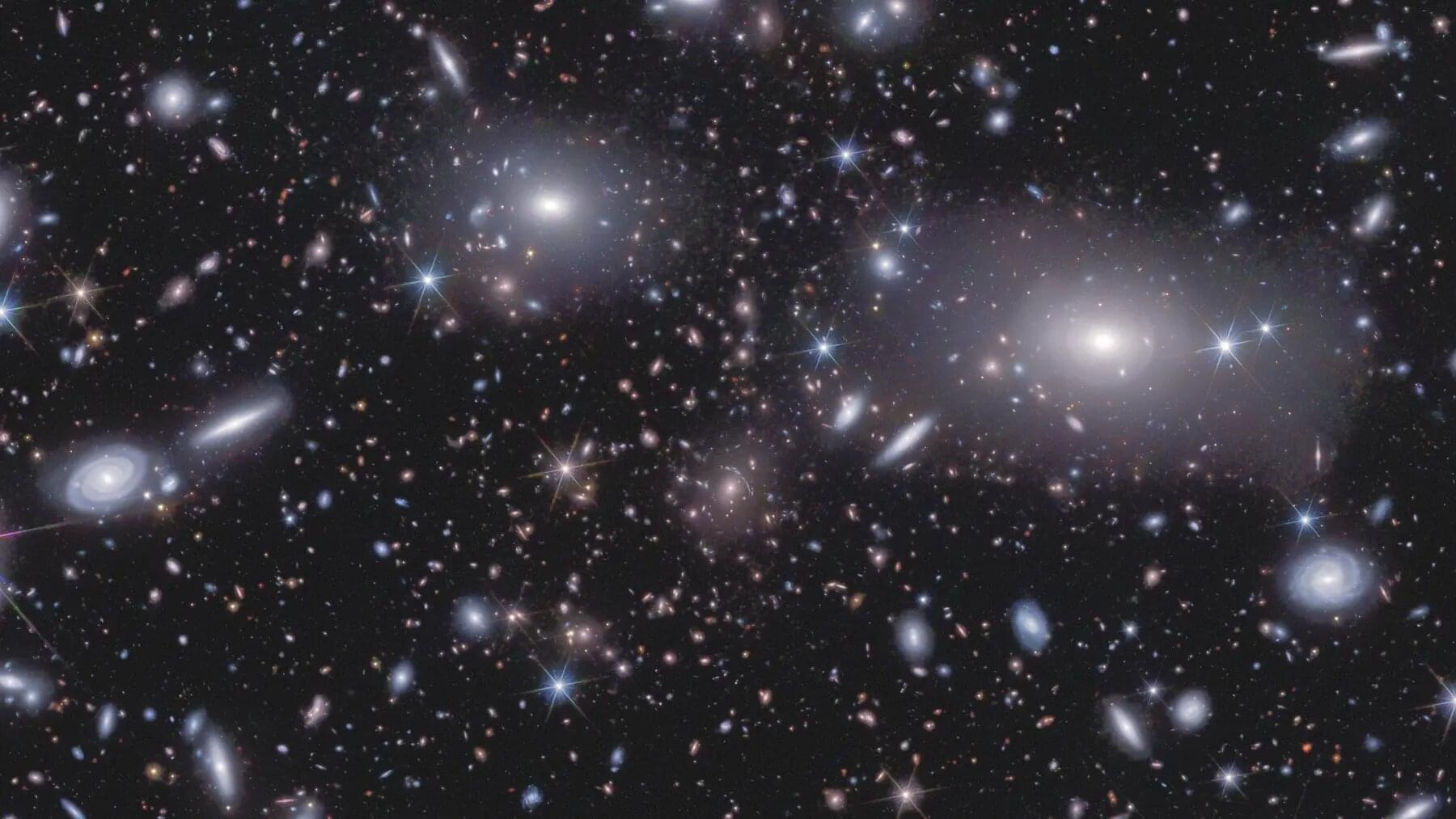
The Euclid Consortium and the European Space Agency (ESA) have released the first major batch of data from the Euclid space telescope. This release, which captures light from more than a billion objects and covers an area of sky equivalent to 9,500 full moons, lays the foundation for Europe’s dark universe detective’s largest-ever 3D map of the cosmos. Several German research facilities play crucial roles in the Euclid mission’s success.
The new data release, named DR1 Foundation, comprises some 13 months of observations and marks the first major release of mission data since the space telescope’s launch in mid-2023. For the first time, it provides scientists with the puzzle pieces needed to begin constructing a detailed 3D map of the cosmos—crucial for solving the many mysteries of the dark universe (including dark energy, dark matter and the cosmic web of galaxies and galaxy clusters).
Spectra and images, including large sky mosaics, accompany the data. “These are far more than beautiful pictures; today marks a scientific milestone in our study of the cosmos,” says ESA’s director of science, Carole Mundell. This unprecedented collection of optical and near-infrared observations represents the largest map of the sky of its kind ever produced from space.