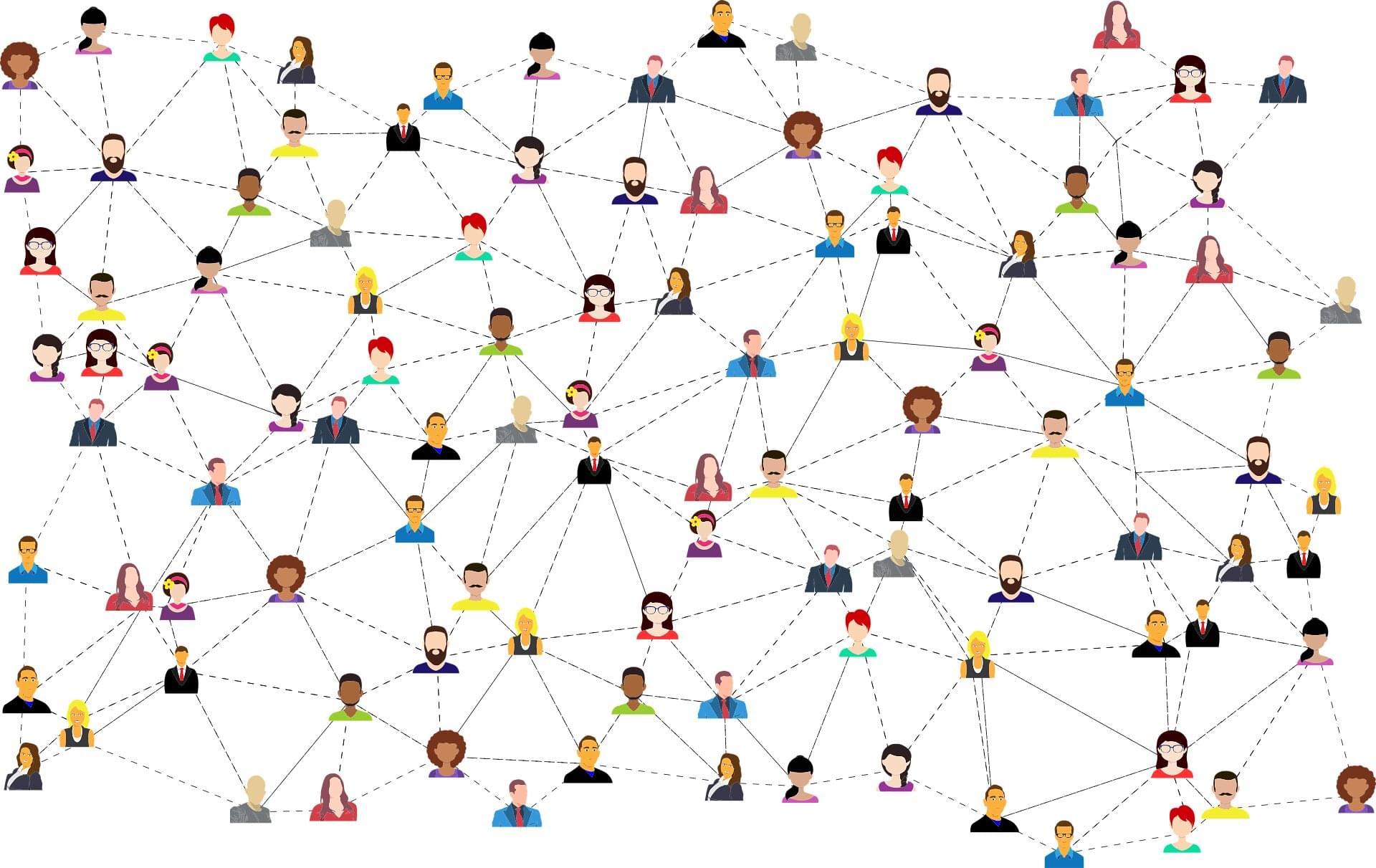
Decades of research show that mental representations of social networks are riddled with errors, with people commonly misidentifying existing ties and reporting relationships that do not exist. While these inaccuracies have been interpreted as noise arising from the limits of memory or attention, Brown University researchers have discovered a much more intriguing explanation: These “errors” are accurate representations of social connections that just haven’t happened yet.
In a study published in Science Advances, the team showed how misperceptions about social relations serve as adaptive forecasts of how a social network will evolve.
“Collectively, our results provide striking evidence that the human brain does not just represent the social world as it is but what it is expected to become in the future,” said study author Oriel FeldmanHall, a professor of cognitive and psychological sciences affiliated with Brown’s Carney Institute for Brain Science.