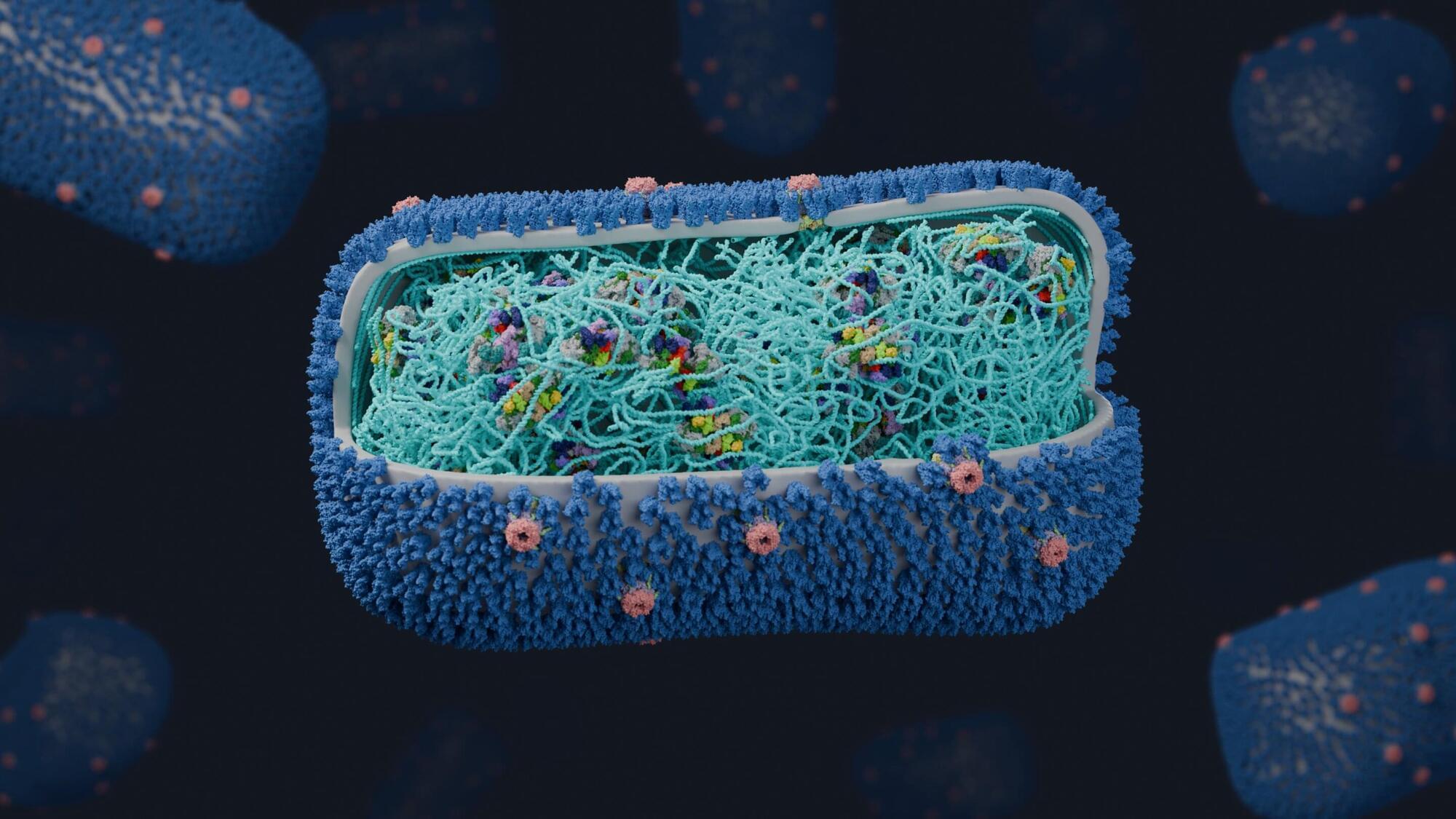
Mpox remains a smoldering threat, with recent clusters in Brazil, Thailand and Austria and ongoing hot spots across multiple African countries. Other poxviruses also endanger human or animal health. A new study by the Institute of Science and Technology Austria (ISTA) uncovers the inner workings of the poxvirus core: how its gene-copying machines sit parked in dormant pairs, ready to print viral instructions and release them into the host cell through dedicated export portals embedded in the core shell.
These findings, published in Nature, offer fresh targets for antiviral drug development and improve our understanding of how to engineer poxviruses as a biomedical tool, such as for cancer therapies.
Smallpox was highly contagious and killed around 30% of those infected, causing more than 300 million deaths. In 1980, the World Health Organization declared it eradicated thanks to a global vaccination campaign using a lab-adapted form of the prototypic poxvirus called vaccinia virus.