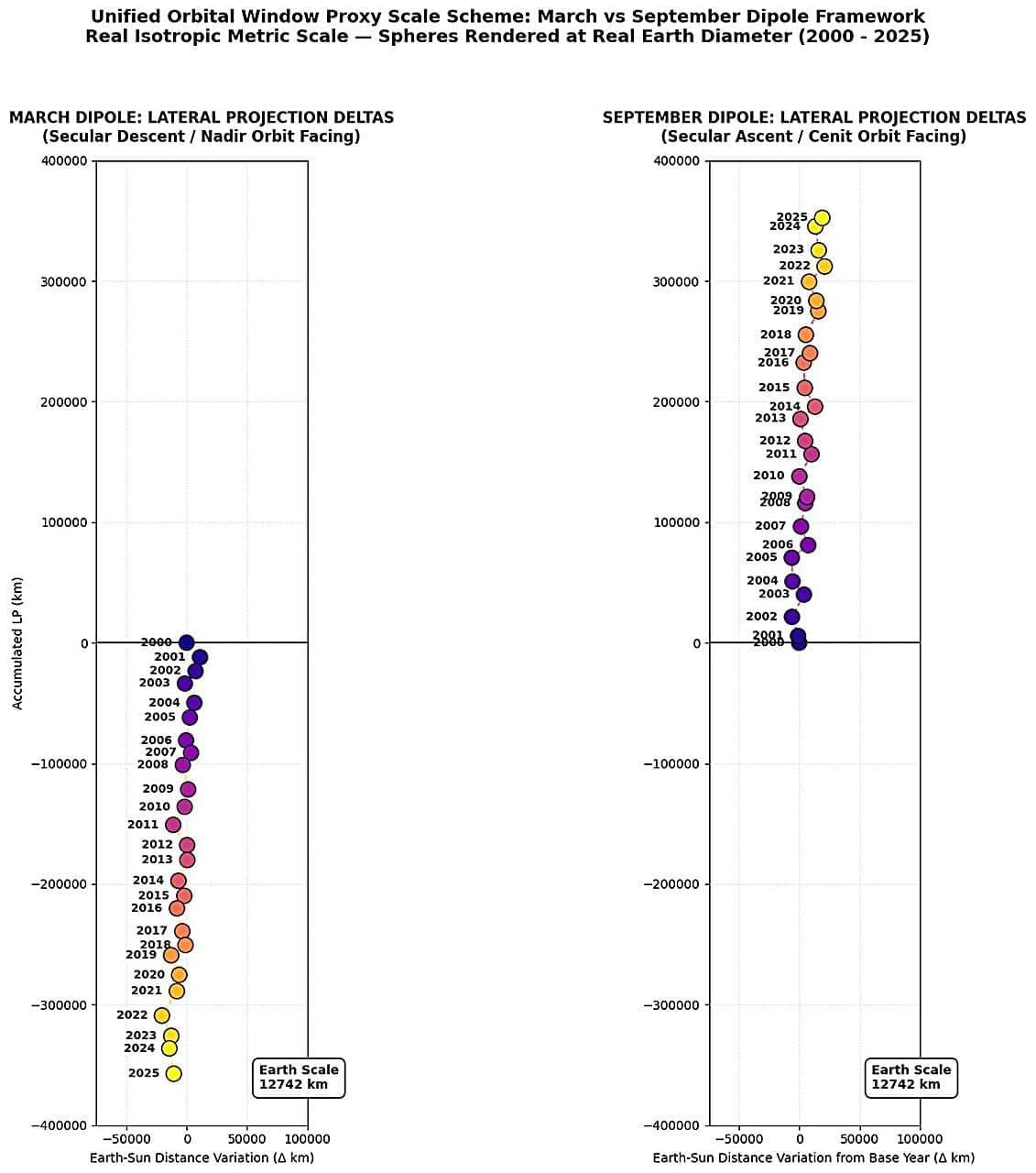
Every few years, an unusual warming of surface waters across the central and eastern tropical Pacific—known as El Niño—reorganizes atmospheric circulation worldwide, bringing severe droughts to some continents and torrential rainfall to others. For decades, oceanographers and meteorologists have mapped the intricate internal machinery behind the El Niño–Southern Oscillation (ENSO), from shifting trade winds to subsurface ocean waves.
Yet one fundamental question has always intrigued me: Why does ENSO recur on the specific timescales that it does? In my recent study, published in Frontiers in Earth Science, I explored whether subtle astronomical rhythms in Earth’s orbit provide an underlying background tempo for this climate cycle.
I approached this question through the lens of astroclimatology, an interdisciplinary bridge connecting celestial mechanics, statistical signal processing and climate dynamics.