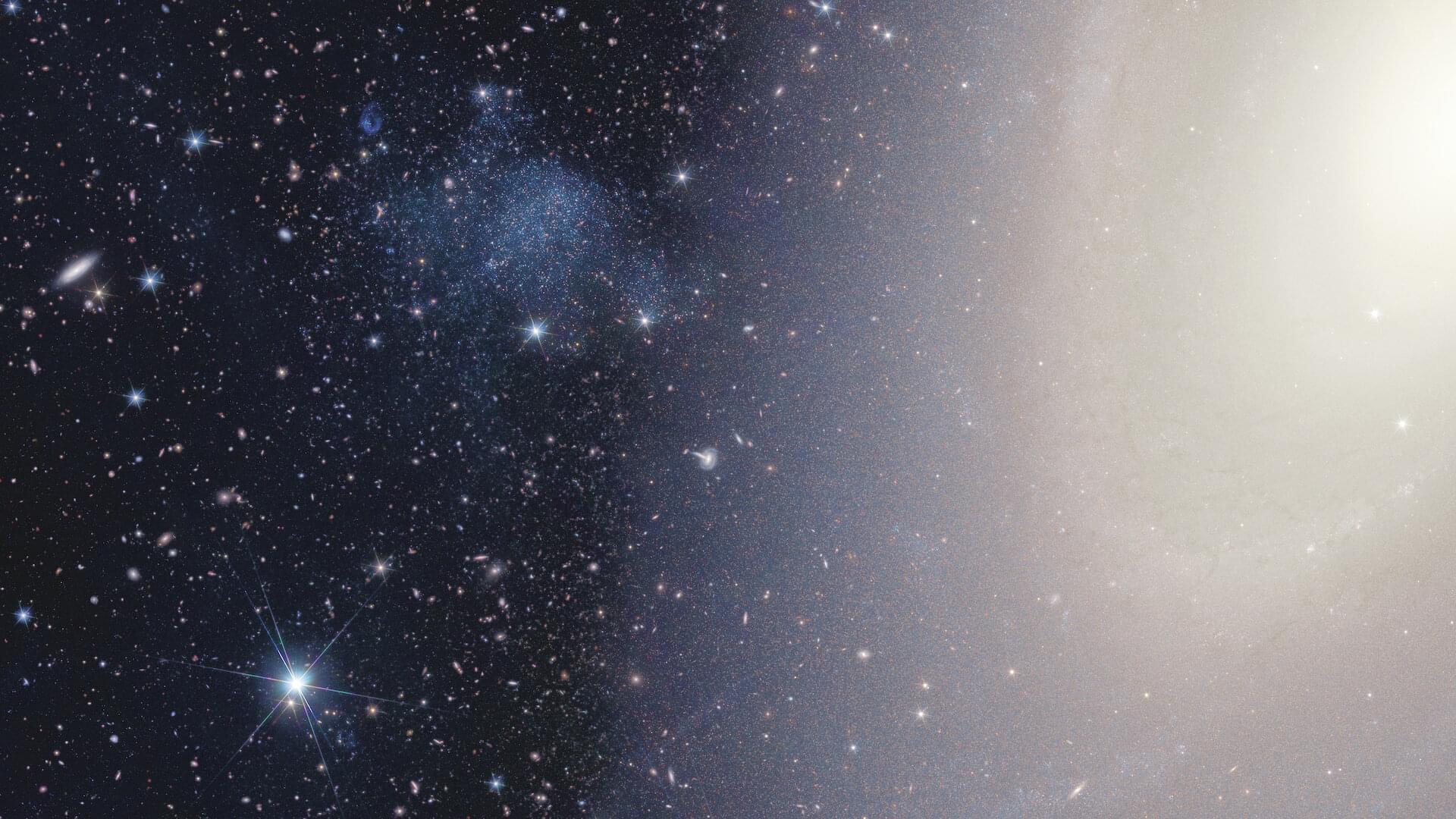
UBC researchers have helped uncover 15,000 new potential strong gravitational lenses—the largest collection of these cosmic tools that help astronomers investigate dark matter.
The first major release of data from the European Space Agency’s Euclid space telescope comprises 1.7 million gigabytes of data. Analysis by a global consortium of more than 2,000 scientists, including more than 30 Canadians, revealed more than 900 million galaxies and 60 million quasars—the brilliant cores of distant galaxies—across almost 5% of the entire night sky from 13 months of observation.
“Strong lenses have been difficult to find—the odds were about 1 in 10,000,” said co-author Hrishabh Srivastava, a doctoral student in the UBC department of physics and astronomy (PHAS). “Before Euclid, we had fewer than 1,000 confirmed strong lenses. Now we have 15,000 new candidates.”