YOUR BRAIN FILES ½ AND 7 ON THE SAME INVISIBLE RULER
When you see the fraction ¼, your eyes meet a four. Your brain, according to a new brain-imaging study, treats it as something close to zero. In a region at the top of the brain, fractions and whole numbers appear to be placed along one shared line, arranged by how big they are and not by what they look like.
The finding comes from 20 adults. All were native French speakers, and the study used functional MRI, which tracks blood flow as an indirect measure of brain activity. The result is a pattern in group averages, not a recording of individual neurons, and it does not show why fractions are harder to learn. It was published in PLOS Biology on 22 October 2026.
## WHAT WAS FOUND
The paper, “A cortical semantic map integrates fractions and integers in the human brain,” is by Daniela Valério and Stanislas Dehaene of the INSERM-CEA Cognitive Neuroimaging Unit (UNICOG) in France. Dehaene has spent decades studying how the brain represents numbers.
Volunteers lay in an MRI scanner and viewed a mix of fractions and whole numbers. For each one, they judged whether it was larger or smaller than the number shown before it. The scan focused on the anterior inferior parietal cortex, a region already known to be involved in number processing.
In that region, activity formed an organised pattern that resembles a number line. Small values produced one kind of activity pattern, shown in reddish tones in the published averages, and larger values produced another, shown in bluish tones. Whole numbers and fractions were placed on the same line, by magnitude, not in separate systems.
## WHY IT IS SURPRISING
A fraction is written with two integers, yet its value can be tiny. In ¼, the symbol includes a 4, but the quantity is small. An obvious alternative is that the brain would keep the digits’ sizes in mind and treat fractions as a separate kind of object. Instead, the activity reflected the numerical relationship, going beyond the digits themselves. An independent neuroscientist, Abiot Derbie, who was not involved in the study, put it this way: the results show how the brain links a symbol to its meaning.
The researchers describe it as the first study to investigate the geometry of neural representations for fractions and integers together. Earlier work had shown the parietal cortex represents magnitude, but mostly for whole numbers.
## HOW IT WAS MEASURED
The experiment used high-resolution fMRI, in which a scanner detects changes in blood oxygenation in small volumes of the brain, called voxels. The researchers looked at the spatial pattern of activity across the parietal cortex, not just whether it was “on”. They also measured behaviour. As expected, people were slower and made more errors with fractions than with whole numbers.
## WHY IT MATTERS
Fractions are notorious as a stumbling block in school mathematics. This study suggests that, at least in adults, the brain does manage to give them a place on the same mental number line as integers. It does not show how that arrangement emerges, whether it is the same in children, or why learning it is hard. Derbie suggested that scanning children before and after they learn fractions could test that.
## WHAT THE RESULT DOES NOT SHOW
It does not show a cause. It is a correlation between a magnitude and a pattern of brain activity, in 20 volunteers. Only native French speakers took part, so the findings may not carry over to other languages or cultures. Decimals were not tested. The study did not look at changes with age, education or mathematical background, and the authors say it was not designed to explain why fractions are harder to learn. It also cannot show that the brain actually uses this map to calculate. No clinical or educational benefit was tested.
## A CLOSING THOUGHT
Numbers are abstract. Nobody has ever touched ¾. Yet the brain seems to give every quantity, however it is written, an address on one mental ruler.
Sources: — Primary paper: Valério D., Debray S., Karami A., Cauté M., Gravel N., Dehaene S. “A cortical semantic map integrates fractions and integers in the human brain.” PLOS Biology 24(10): e3003820, 22 October 2026. DOI: 10.1371/journal.pbio.3003820. The journal page could not be opened here, so the sample size, methods and results come from the Live Science report on the study and were not checked against the paper. — Context: [Live Science report](https://www.livescience.com/health/neuroscience/brain-scans-…are-values)
Arşen Kaan Science | Science Editorial https://arsenkaan-science.com/en/
#ArsenKaanScience #Neuroscience #Mathematics #HumanBrain #fMRI
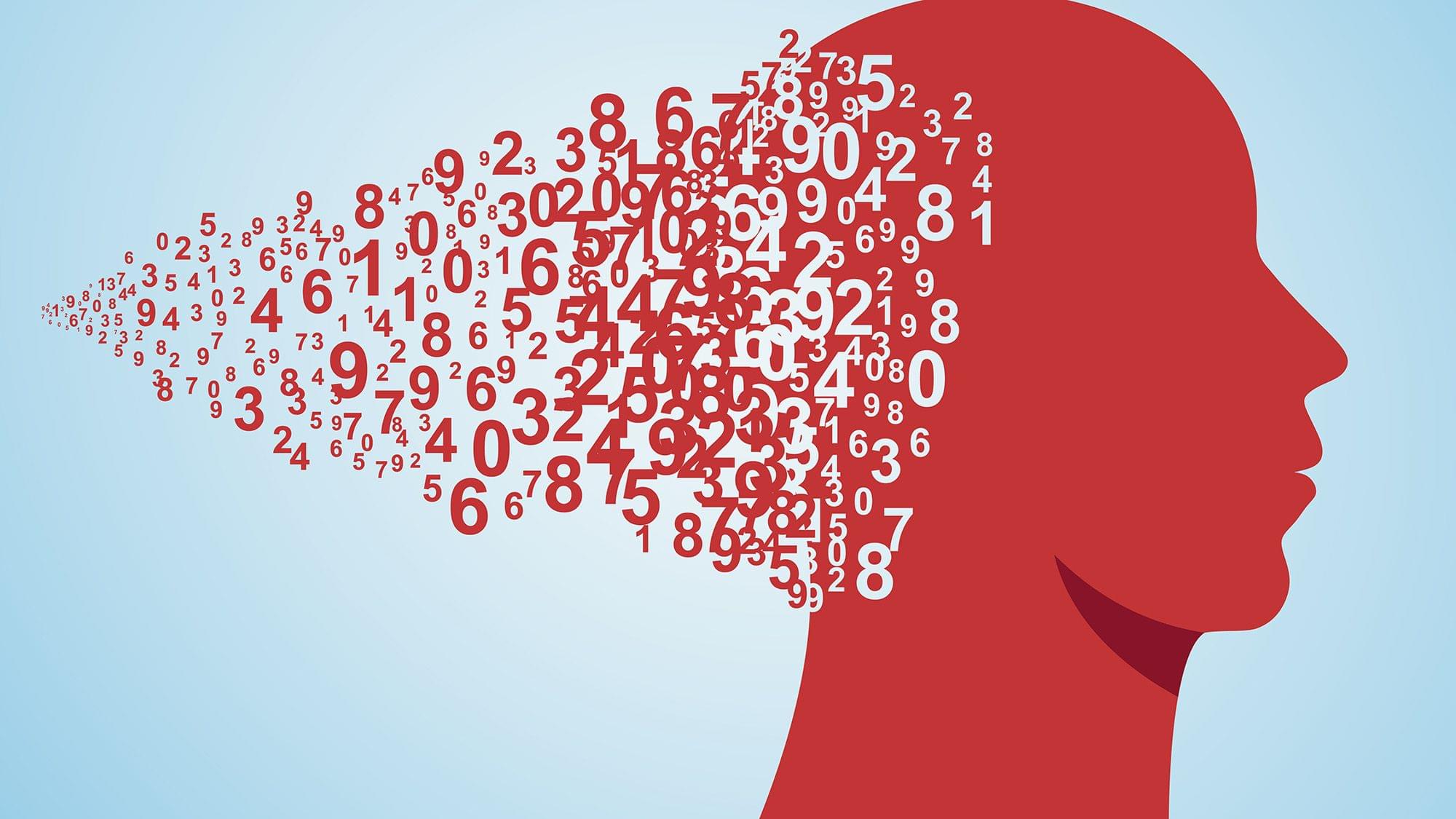
Although whole numbers and fractions are processed differently in the brain, when you compare their values, a single “mental map” akin to a number line lights up.