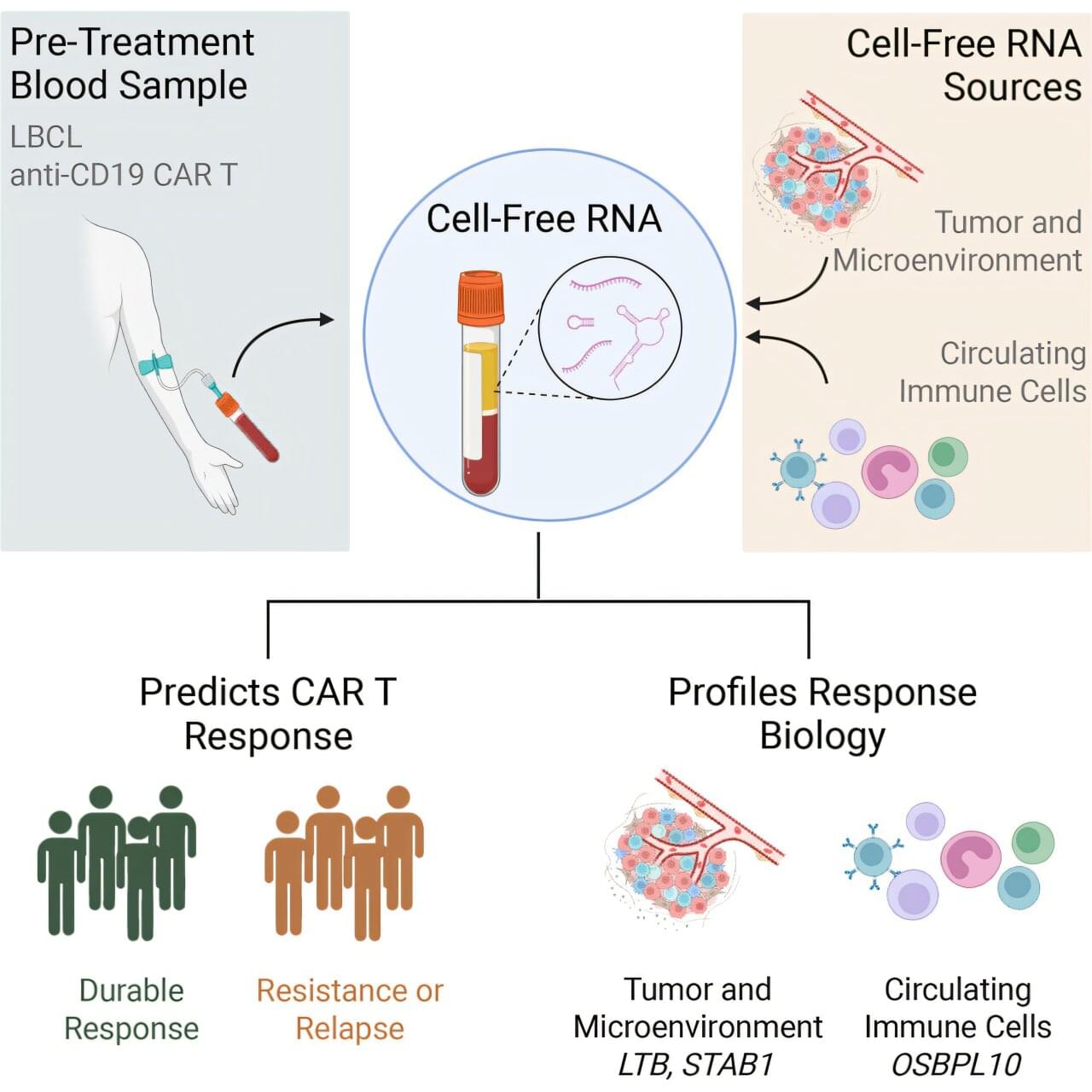
Cornell engineers and Dana-Farber oncologists found that RNA floating in the plasma carries a signature of a lymphoma tumor’s surroundings, one that tracked with whether patients were still in remission a year later.
Of 91 lymphoma patients who received a powerful cell therapy at Dana-Farber Cancer Institute, those whose blood carried a particular gene expression signature before treatment were far less likely to see their cancer progress. Patients with high scores on that signature had an 80% lower risk of progression than those with low scores, according to a new study from Cornell and Dana-Farber. The research was published Nov. 18 in the journal Cell Reports Medicine.
The genetic signature comes from cell-free RNA, fragments of genetic material shed by cells into the bloodstream. The researchers say it offers a glimpse of the tumor’s local environment without the need for a biopsy.