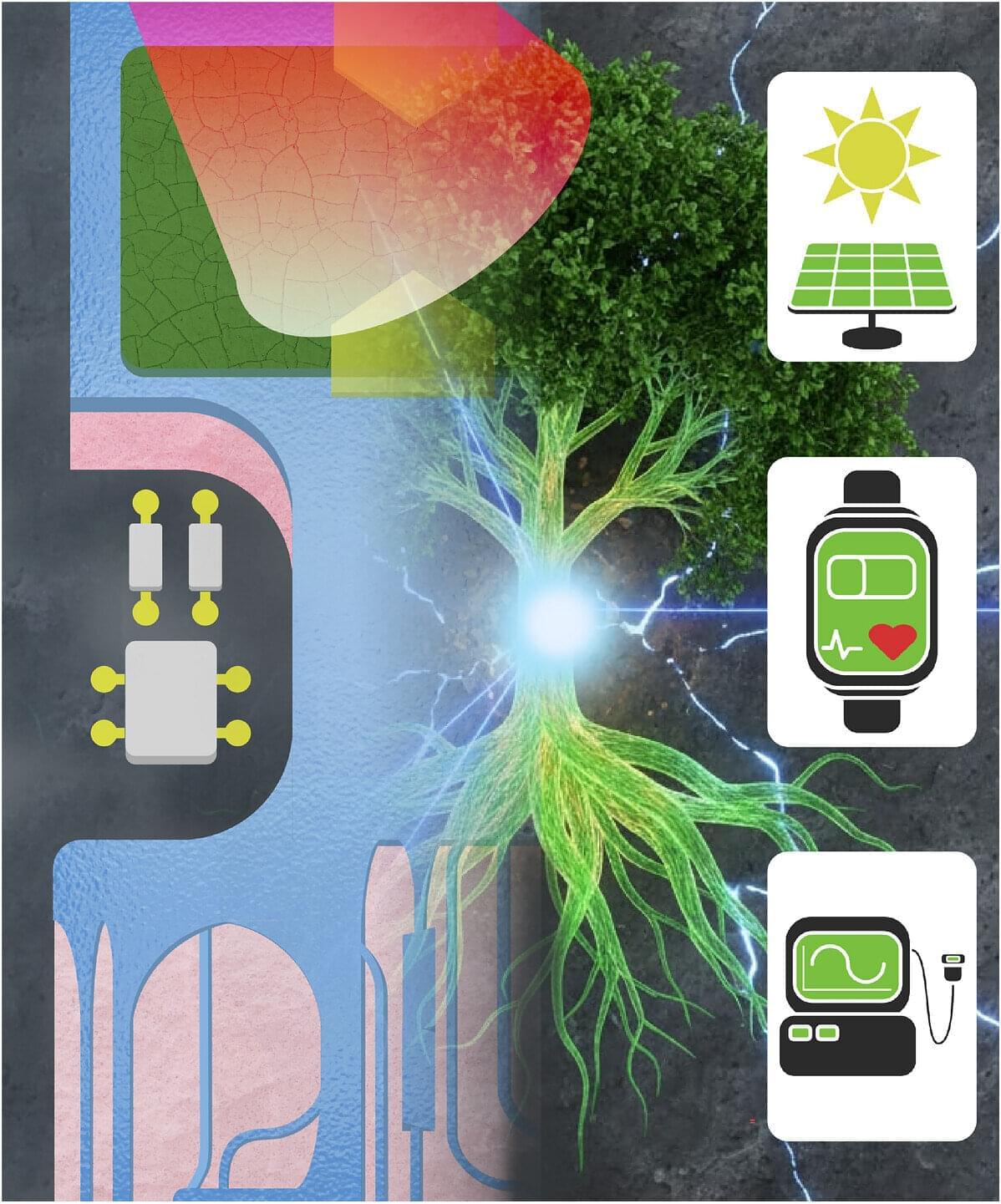
The relentless march of Moore’s law is slowing as electronic circuits hit fundamental limits in speed and energy efficiency. The solution, many researchers believe, lies in photonics, using light instead of electrons to process and transmit information. But today’s photonic chips rely on the same rigid, inorganic semiconductors that dominate electronics. A comprehensive new review, led by an international group of researchers, argues that the future of photonics may be grown, not fabricated.
The review, published in Advanced Functional Materials, surveys the rapidly expanding field of integrated biophotonics: the marriage of biological materials with photonic devices. According to the authors, biomaterials such as fluorescent proteins, DNA, silk fibroin and chlorophyll are not just eco-friendly alternatives; they bring unique capabilities that synthetic materials lack, including genetic programmability, self-assembly and the ability to interface seamlessly with living tissue.
“Biomaterials are most effective not as wholesale replacements for inorganic semiconductors, but as functionally specialized components whose unique physicochemical attributes complement conventional platforms,” the authors write.