A quick kill is not always best when battling bacterial infections. Sometimes, as new Stanford research shows, slower is better.
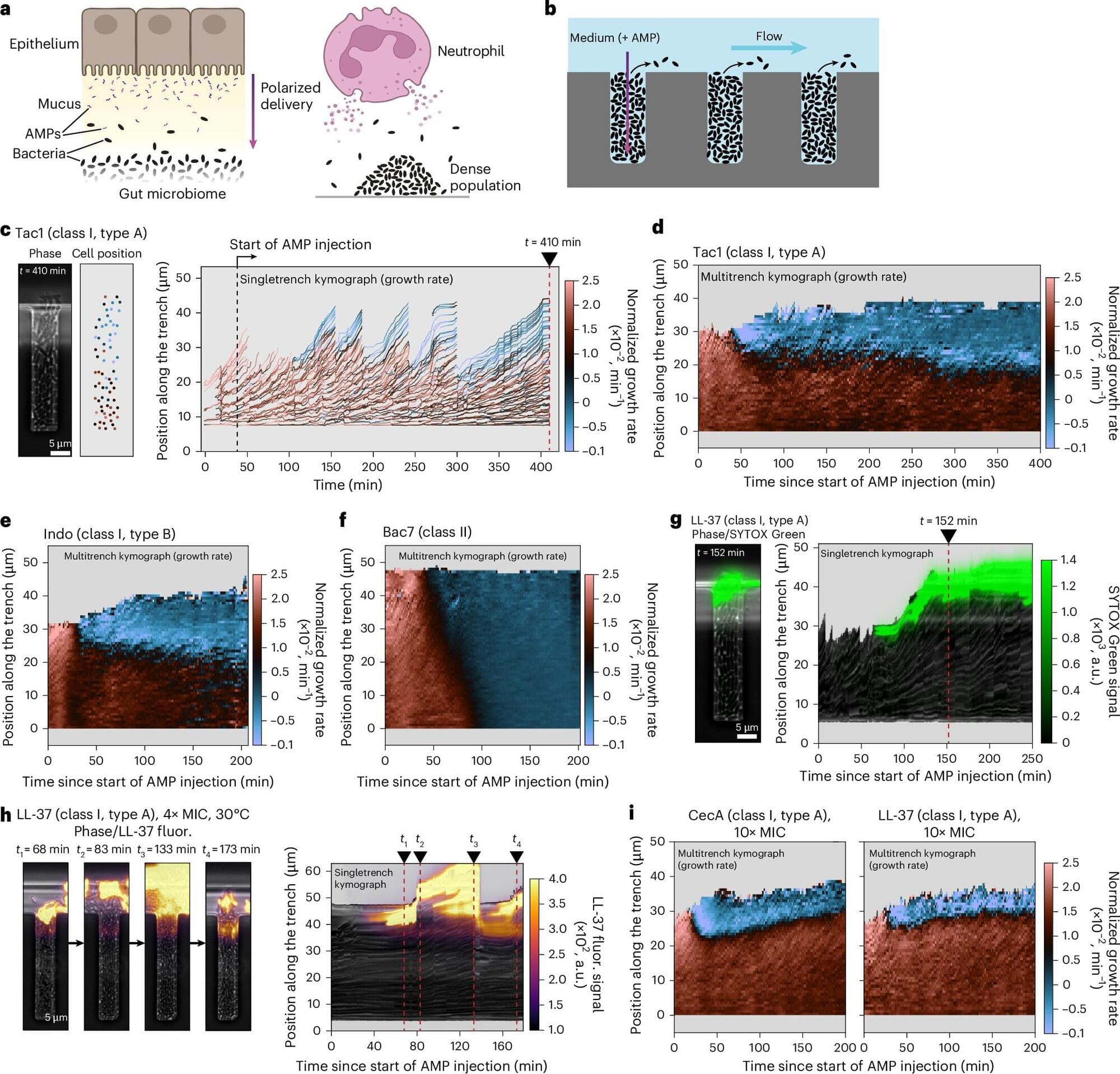
The study, published in the journal Nature Microbiology, focuses on antimicrobial peptides. These special amino acid chains—essentially simple pieces of protein—are found on all living things and act as the body’s first line of immune defense. Researchers have been studying antimicrobial peptides for decades as promising new models for antibiotics to treat drug-resistant infections.
Now, Stanford biologist Christine Jacobs-Wagner’s lab has shown that antimicrobial peptides can be divided into two classes. Those in the first class are very fast killers of single bacterial cells. Those in the second class act more slowly but are more effective at stopping the growth of biofilms—thick layers of bacteria that are the hallmarks of many stubborn infections.