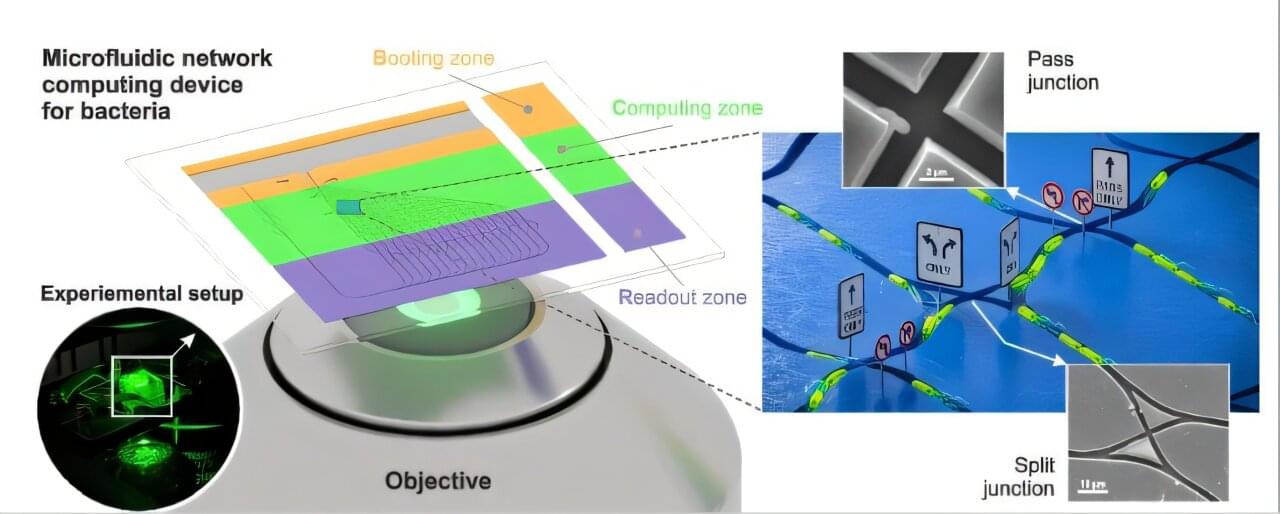
A McGill-led research team has developed a bacteria-based biocomputer that can solve large, complex problems using a small fraction of the memory and resources required by standard (“solid-state”) computers. Possible applications include encryption, molecular biology and artificial intelligence, the researchers said.
Solid-state computers test each possible solution sequentially, which can take years or even centuries to deliver results for complex problems. In contrast, bacteria can explore many possible solutions simultaneously. Additionally, bacteria can divide to create more biological “processors,” they explained.
“Modern electronic computers make millions of operations per second using one chip,” said Dan Nicolau, senior author and professor of bioengineering. “With bacterial division, we have 1 million chips working at the same time. More chips mean you can resolve the problem faster, even if for each ‘processor,’ the number of operations per second is slower.