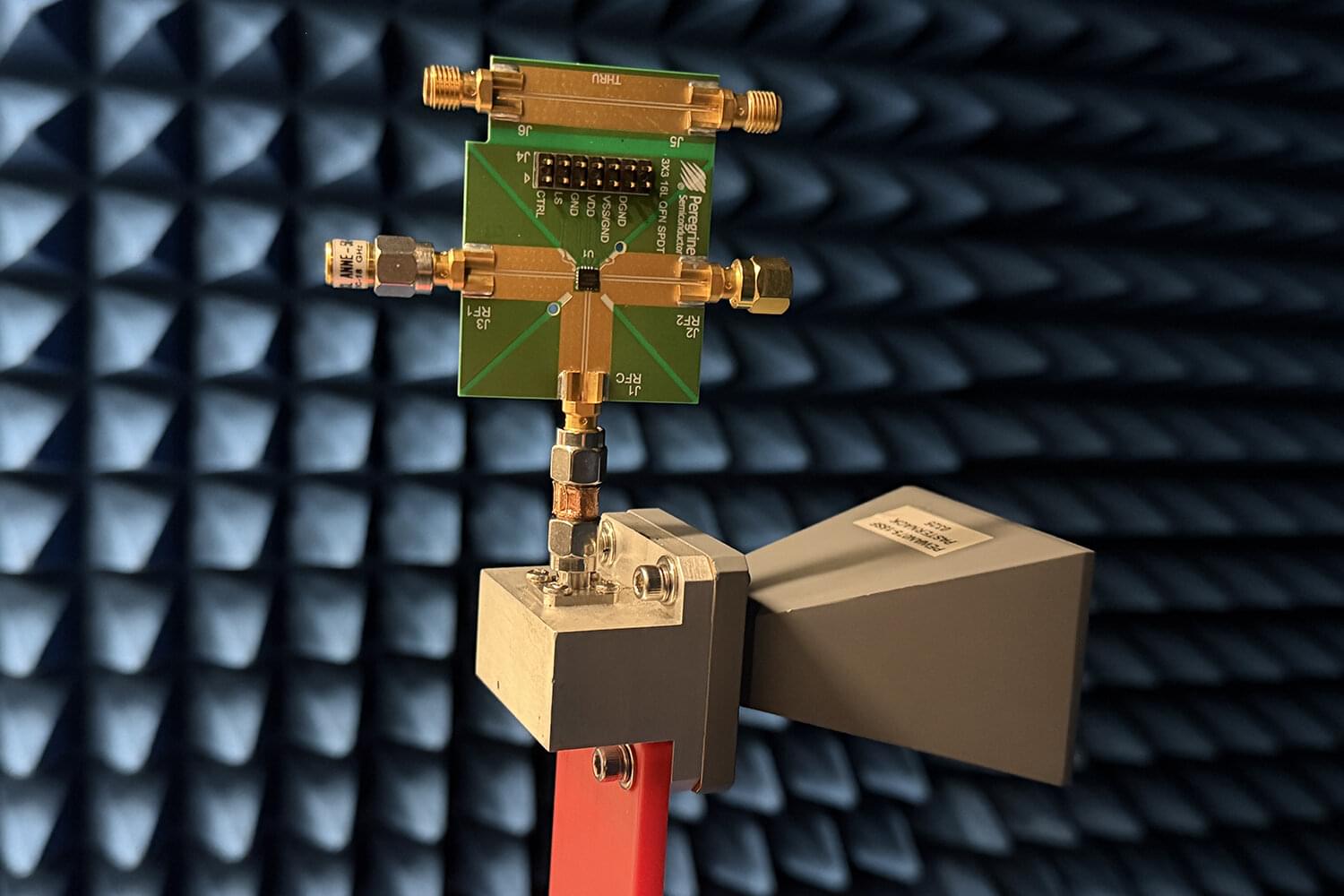
Stanford researchers recently revealed how a seemingly physics-defying wireless communication technology works. The new technology, called thermal noise communication, harnesses background static that normally is the bane of radio, cellular and other wireless signals. In their new study published in the Proceedings of the National Academy of Sciences, the team showed how a transmitter could deliver data to a receiver without any actively produced signal by manipulating tiny oscillations in voltage.
The findings describe how the system works at a fundamental level, opening the door to improving the communication mode and determining real-world applications for it. “We’ve built a system that others could very easily implement,” said senior author Zerina Kapetanovic, an assistant professor of electrical engineering.
A physics mystery In her previous research at the University of Washington, Kapetanovic studied agricultural sensing technologies, which inspired her to pursue low-power modes of relaying data like soil moisture levels. She wondered if it might be possible to create a device similar to the radio-frequency identification (RFID) window tags that are used for highway tolls in cars—without requiring an energy-intensive radio signal to ping.