The body relies on a finely tuned network of receptors that unlock their docking sites in response to specific chemical signals. In some genetic diseases, however, mutations can leave these receptors unable to do their job. A recent study published in Science Translational Medicine has offered a way around this problem with an artificial protein designed to activate one such mutated receptor.
Donohue syndrome, a rare genetic disorder, is caused by mutations in the insulin receptor gene that disrupt the receptor’s normal docking site. With insulin no longer able to bind to these sites, blood sugar levels rise dangerously high. Common insulin therapies often fail to act because the receptor cannot recognize them.
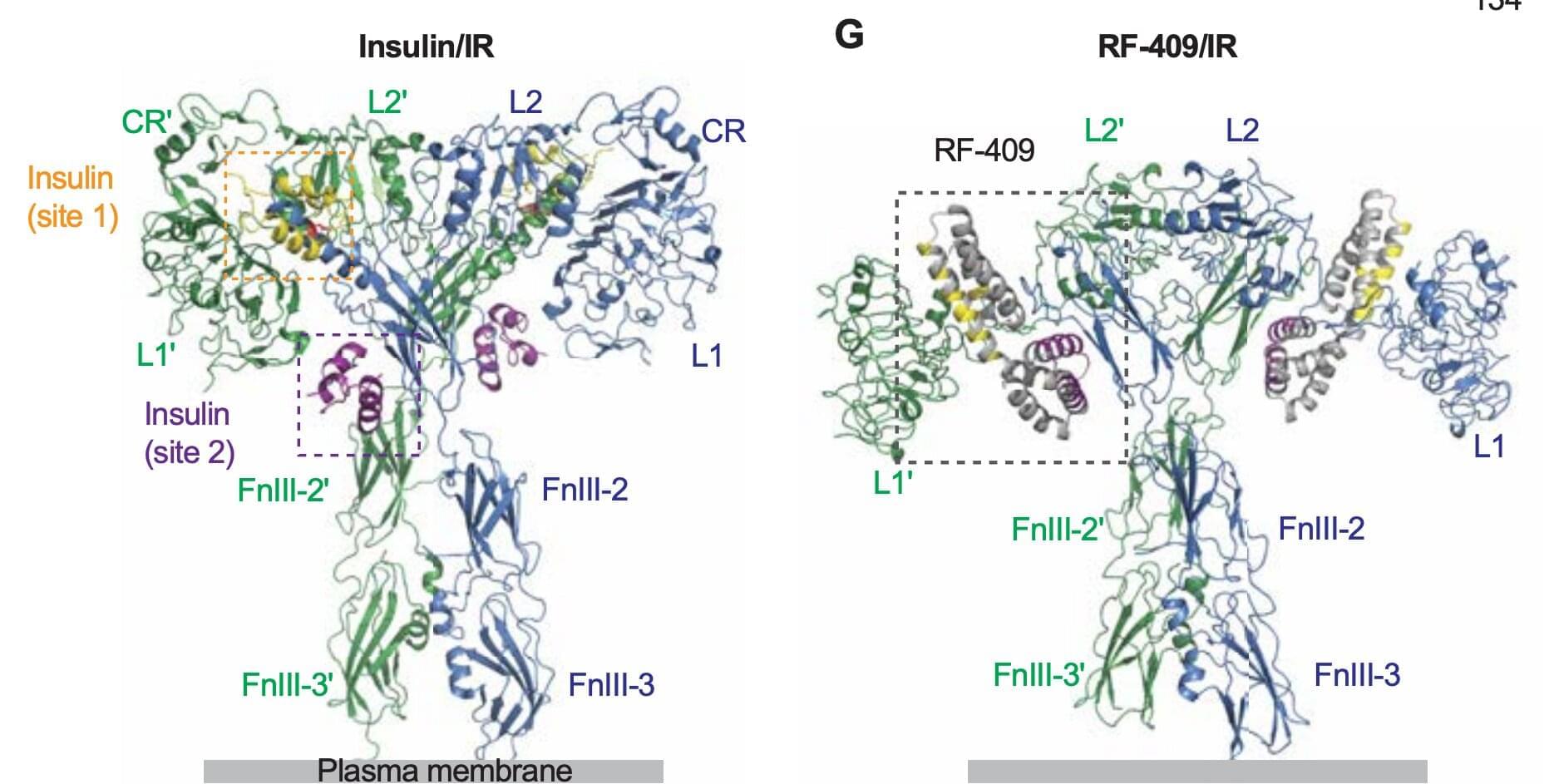
Using AI-guided protein engineering, the researchers created RF-409, a synthetic protein designed to trigger the insulin receptor. When tested on mice with Donohue syndrome–related receptor mutations, RF-409 latched onto insulin receptors and lowered blood sugar when ordinary insulin failed. The artificial candidate completely bypassed the broken genetic docking site by binding to the insulin receptor from different angles than its natural counterpart does.