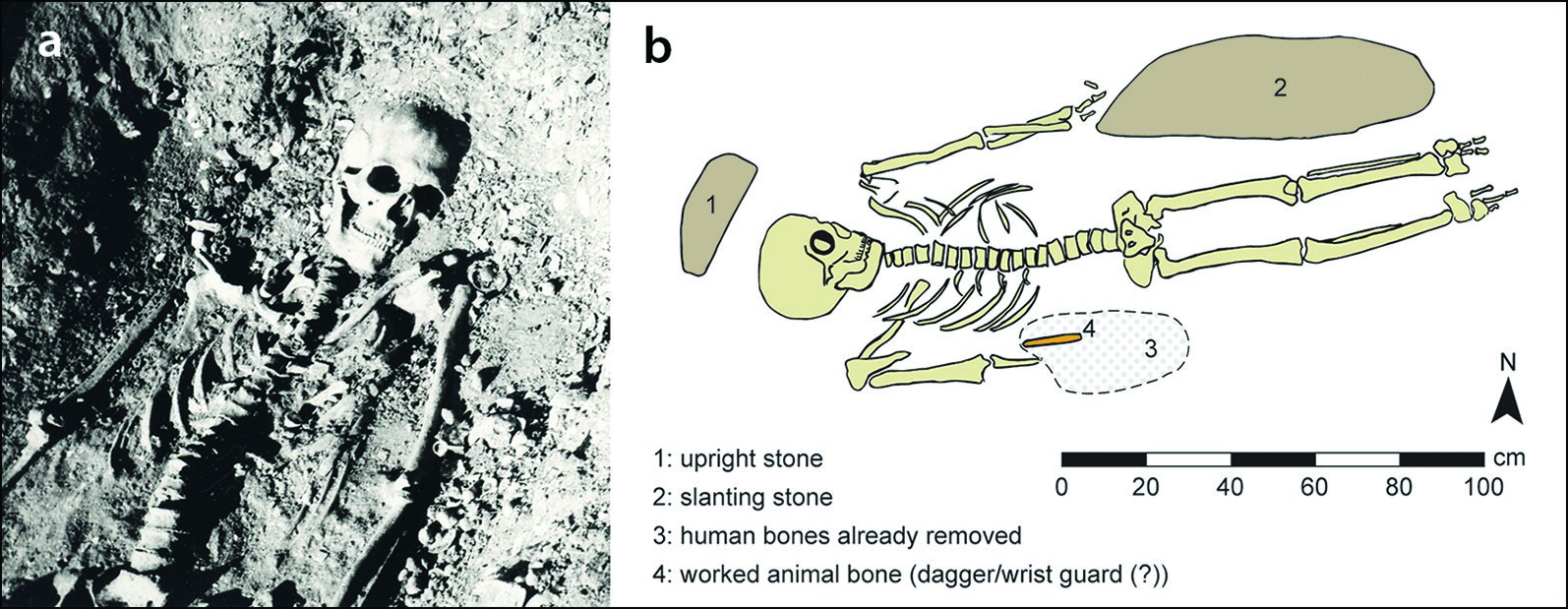
Radiocarbon dating and isotope analysis of an immaculately preserved skeleton from Mesolithic Denmark indicate that the individual lived through the introduction of agriculture and adapted his diet to the change, providing a unique “eyewitness account” of one of humanity’s most significant technological revolutions.
About 6,000 years ago, a biologically male individual died and was buried in a shell midden on the island of Sejerø, Denmark. Nicknamed “Rødhals Man,” he was one of the indigenous foragers who lived on the island, subsisting by fishing, hunting marine mammals and gathering marine resources such as shellfish.
However, this life was not to last, as irreversible change came with the arrival of Neolithic farmers from the south.