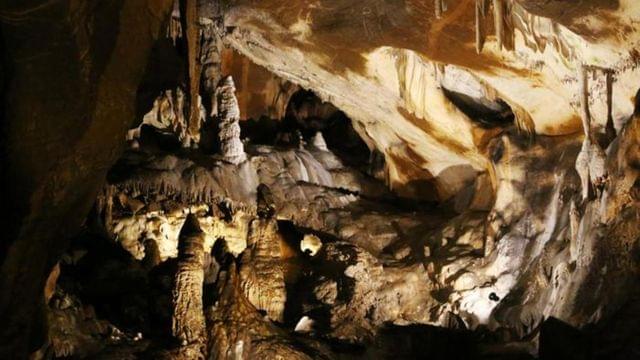
At the same time, the researchers found evidence for long-term population continuity in southwestern Europe. Genomic data from Chufín Cave in northern Spain indicate that western European ancestry persisted in the region over thousands of years. The team also analysed ancient human DNA preserved directly in cave sediment. At El Mirón Cave in Cantabria, they recovered enough human nuclear DNA from a 22,000-year-old layer to determine its genetic ancestry – despite the absence of human bones or teeth. “Sedimentary DNA allows us to recover genetic information from periods where human remains are missing,” says senior author Ron Pinhasi, Department of Evolutionary Anthropology at the University of Vienna, whose team led this study. “This gives us a way to connect archaeological layers with the genetic ancestry of the people who occupied a site.” The El Mirón DNA shows that this ancestry persisted through the Last Glacial Maximum, supporting the idea of the Iberian Peninsula as an Ice Age refuge.
What mother and son reveal about mating
In southern Italy, the team analysed Ostuni1b, a male fetus and most likely the son of the previously studied woman Ostuni1. His father probably came from the same genetic population, yet the parents were not closely related – suggesting mating practices that helped avoid high levels of inbreeding. Together, the findings show that regional population continuity could coexist with genetic exchange over large distances. Gelabert’s team is now combining sedimentary DNA with advanced proteomic analyses to investigate the first trans-European expansions of modern humans and their interactions with carnivores where organic remains are scarce.