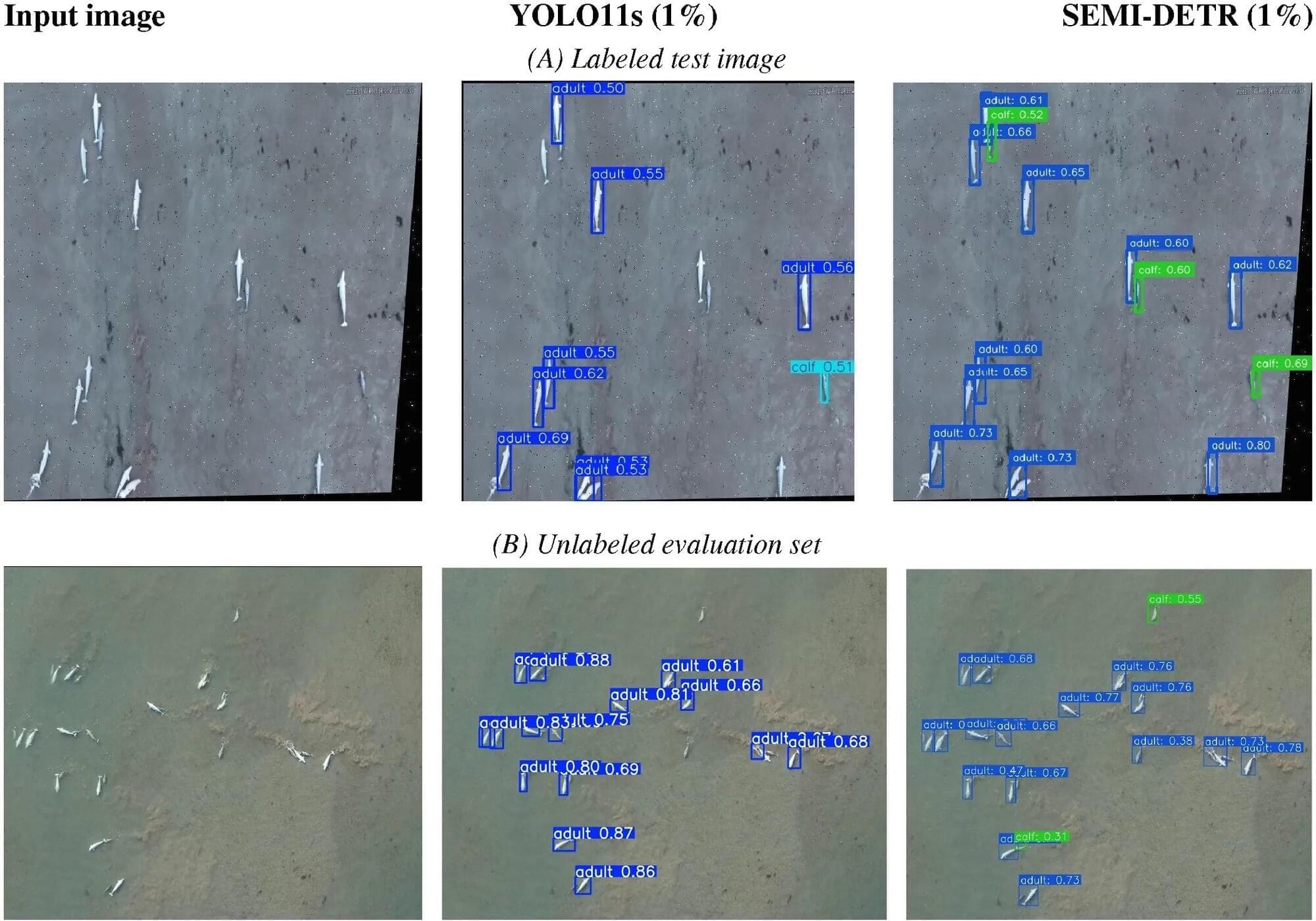
For Arctic researchers, counting beluga whales from the air can mean painstakingly examining thousands of aerial images—searching for animals that may be difficult to see and even harder to distinguish from one another. The challenge is especially significant when researchers are trying to identify calves, whose smaller size, lower numbers and variable appearance can make them easy to miss.
Knowing how many calves are present can provide critical clues about reproduction, population growth and the long-term health of beluga populations.
Now, researchers from Florida Atlantic University’s College of Engineering and Computer Science and Harbor Branch Oceanographic Institute, in collaboration with Fisheries and Oceans Canada and the University of Manitoba, are turning to artificial intelligence to make that process faster and more precise. Their new approach uses deep learning to detect and track beluga whales across sequences of aerial images, helping researchers automate a task that traditionally requires extensive manual annotation.