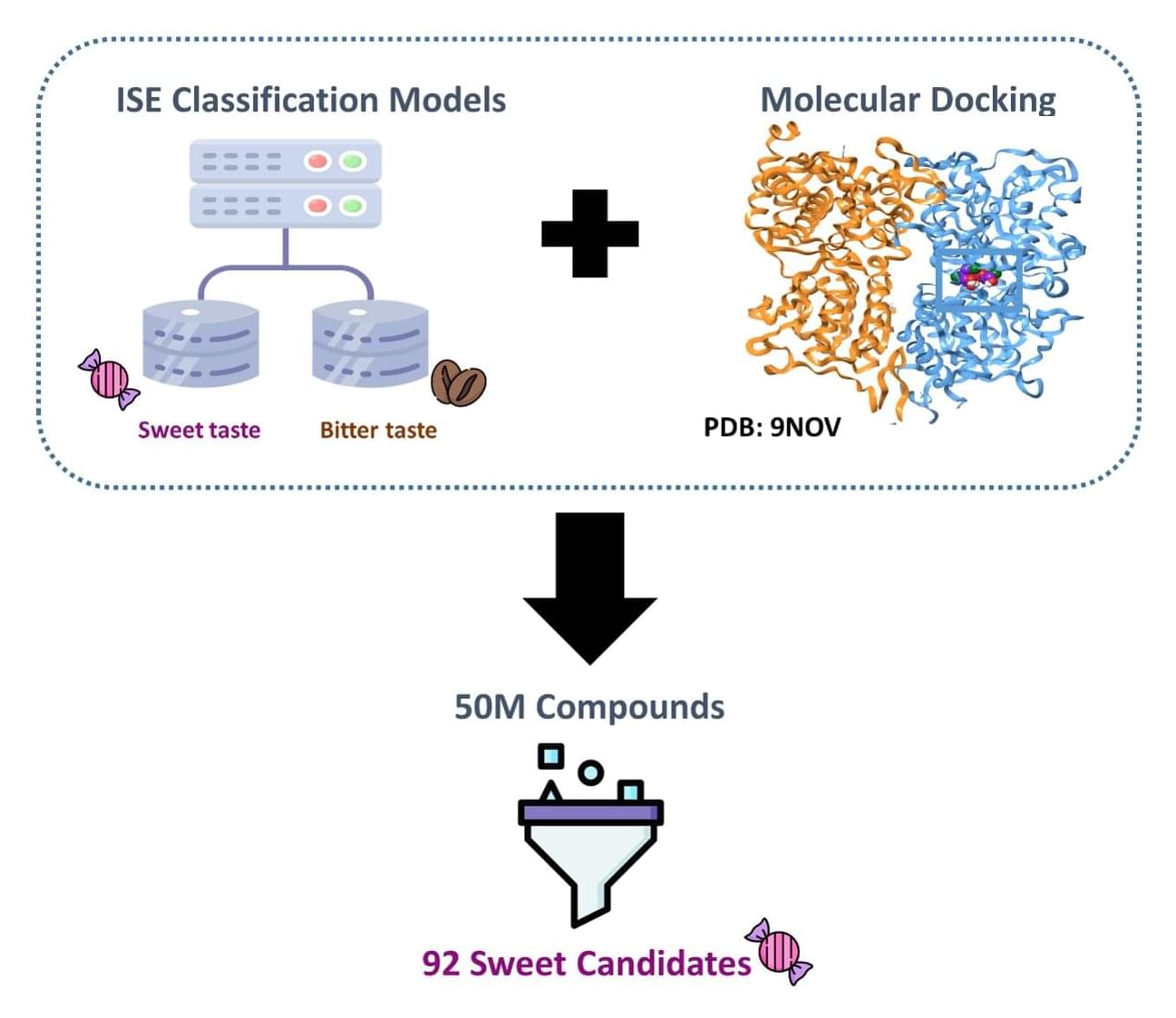
Researchers Dr. Shayma El-Atawneh and professor Amiram Goldblum at the Hebrew University of Jerusalem have developed a new computational framework that identified 92 promising candidates for future sugar substitutes from more than 50 million chemical compounds. The study, published in the journal Food Chemistry, demonstrates how artificial intelligence and molecular modeling could accelerate the discovery of new sweeteners while helping overcome one of the industry’s persistent challenges: unwanted bitter aftertastes.
As demand for low-calorie sugar alternatives grows, scientists are seeking sweeteners that provide pleasant taste along with favorable safety and stability profiles. Excessive sugar consumption has been linked to several health and environmental concerns. High sugar intake can increase the risk of obesity, type 2 diabetes, fatty liver disease and cardiovascular disorders. The FDA has approved artificial sweeteners and established recommended daily amounts per kilogram for each.
However, widely used artificial sweeteners such as aspartame, saccharin and sucralose have limitations, including bitter or metallic aftertastes. Discovering new compounds that are sweet without undesirable characteristics remains a significant challenge.