In the theoretical study of proton-nucleus collisions, the colliding projectiles can be described as streams of color charges moving along their respective trajectories. These color charges couple to gluons, which then produce the particles that are observed in the final state (gluons and quarks, which eventually produce hadrons).
The traditional approach for carrying out these calculations has been to solve the equations that drive the gluon field (known as the Yang-Mills equations) in terms of the color sources. This solution is then used in order to calculate the probability of obtaining a given final state. A major complication with this approach comes from the fact that these solutions are not unique: There are infinitely many of them that nevertheless describe the same physical situation (they are related by gauge transformations). This complication implies that a lot of effort is spent calculating terms that do not contribute to physical observables in the end.
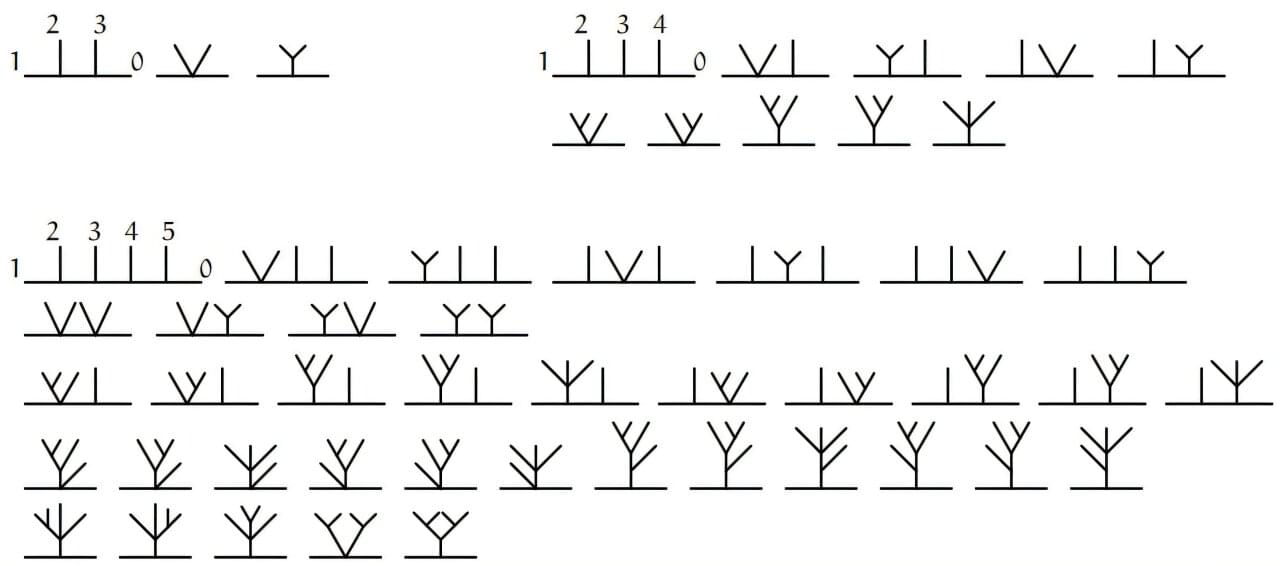
In a new study published in the Journal of High Energy Physics, François Gélis, a physicist at IPhT, started from the observation that solutions of the Yang-Mills equations are in fact sums of tree Feynman graphs. Using this analogy, he was able to apply to this problem methods that were originally developed for scattering amplitudes.