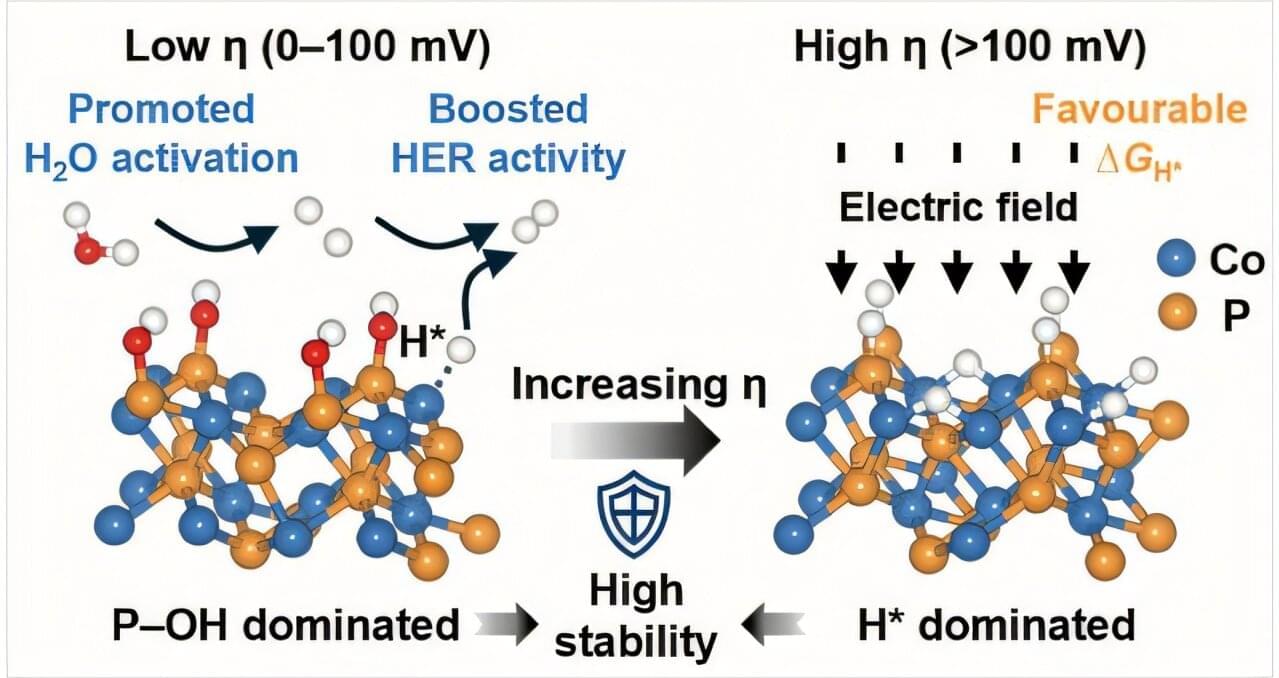
Cobalt phosphide (CoP) is a promising alternative to platinum for producing hydrogen from water. However, scientists have struggled to explain why it performs so well. Computer models have suggested that CoP should become unstable under the conditions used to produce hydrogen, yet experiments show that it remains active and durable in acidic, neutral and alkaline environments.
A new study published in the Journal of the American Chemical Society offers an explanation: CoP changes its surface as it produces hydrogen, helping it maintain its performance while protecting itself from damage. Rather than remaining chemically unchanged, the material responds to the electrical voltage applied during water electrolysis. The chemical species that form on its surface help drive hydrogen production and prevent the catalyst from breaking down.