A missing piece in Einstein’s century-old theory could help scientists understand how matter behaved in the universe’s earliest moments, revealing more about a time we can barely recreate.
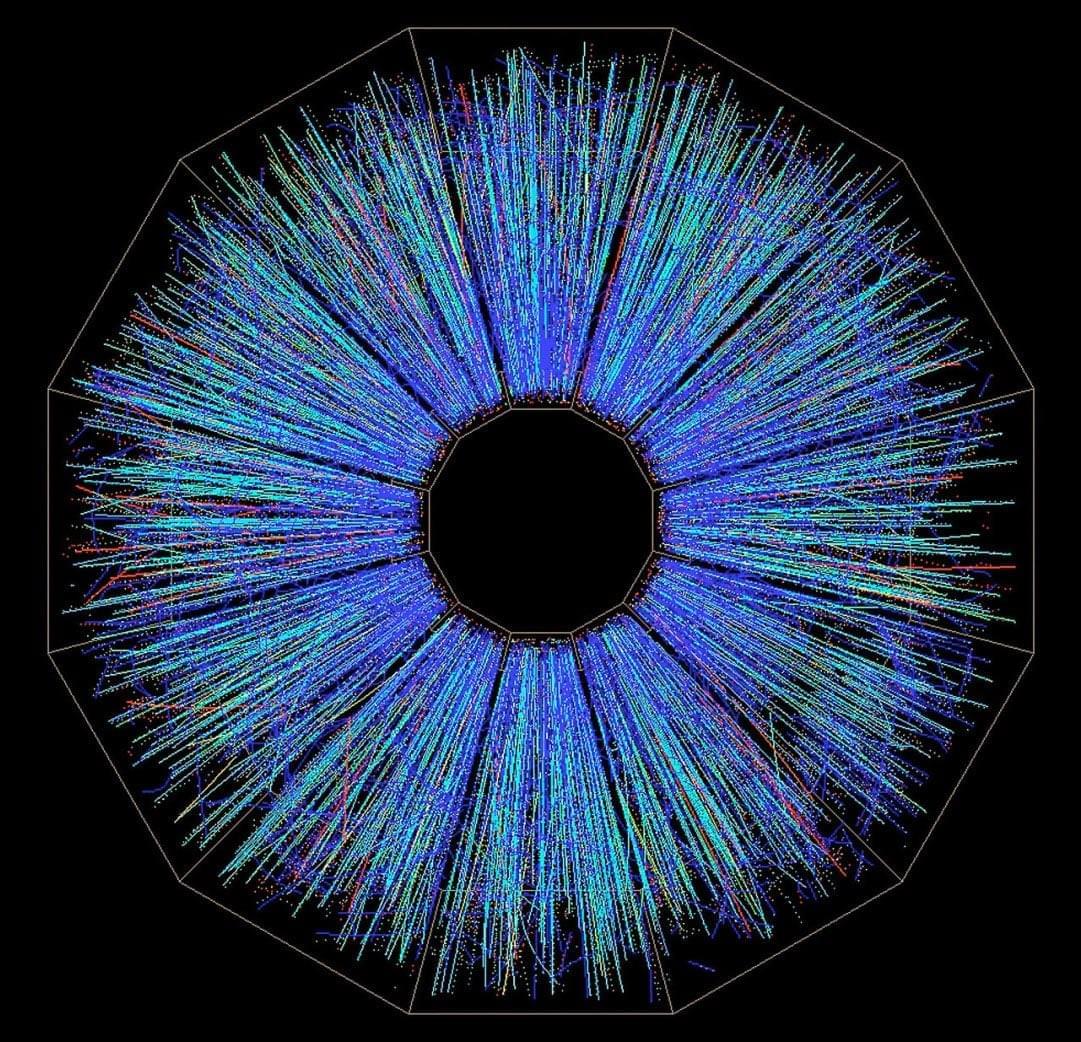
In particle accelerators, scientists smashed ions together at nearly the speed of light to recreate the fluid that existed just after the Big Bang. The resulting droplets were roughly the size of an atomic nucleus and survived for only tens of septillionths of a second. One way to investigate their interior was to track heavy quarks, particles that traveled through the droplets without being part of the surrounding fluid.
That fluid, called quark-gluon plasma, offered a glimpse of the universe’s earliest matter. In the first fraction of a second after the Big Bang, matter existed as a trillion-degree mixture of quarks and gluons, subatomic particles moving at close to the speed of light. This state lasted just a few microseconds before the particles came together to form more stable protons and neutrons.