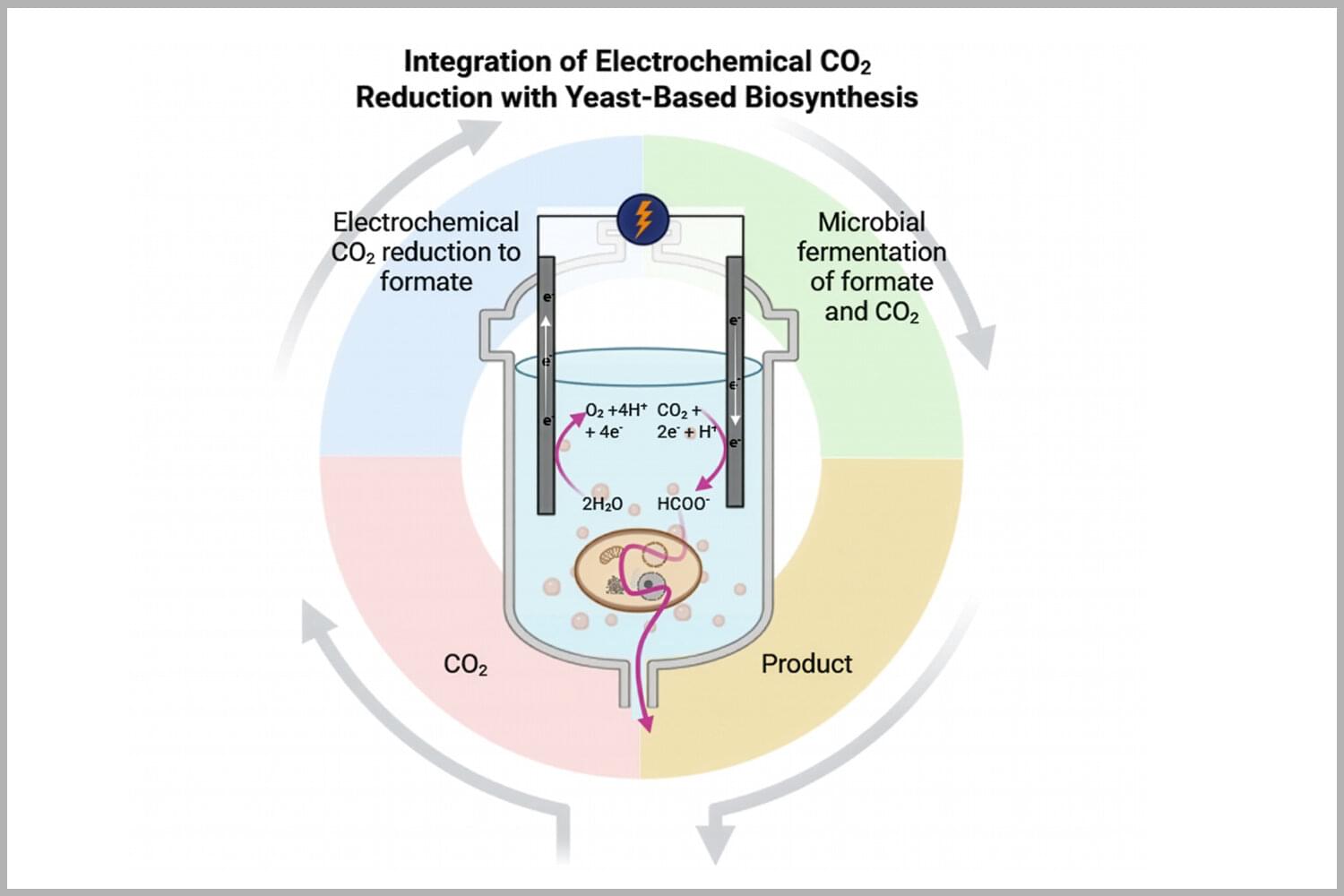
To limit further climate change, researchers are exploring technologies that can convert atmospheric carbon dioxide (CO₂) into useful products. In collaboration with BOKU University in Vienna (Austria), researchers at the Helmholtz Centre for Environmental Research (UFZ) have demonstrated that electrochemical and microbial processes can be combined to capture CO₂ and produce itaconic acid, a bio-based chemical used in industry. According to the researchers, this new process demonstrates how CO₂ emissions can be converted into sustainable bio-based products, with the potential to produce a wider range of valuable chemicals by using different microorganisms.
Itaconic acid is a bio-based organic acid used to manufacture biodegradable plastics, textiles, adhesives and resins. It is considered a promising sustainable alternative to petroleum-based chemicals. Worldwide, around 70,000 t (77,000 short tons) of itaconic acid are produced annually, and production is increasing.
“On an industrial scale, itaconic acid is produced biotechnologically from sugar using a fungus. We have now developed a process that uses CO₂ instead of sugar as a starting material so that we can put emissions to productive use,” explains Falk Harnisch, an electrobiotechnologist at the UFZ and last author of the study.