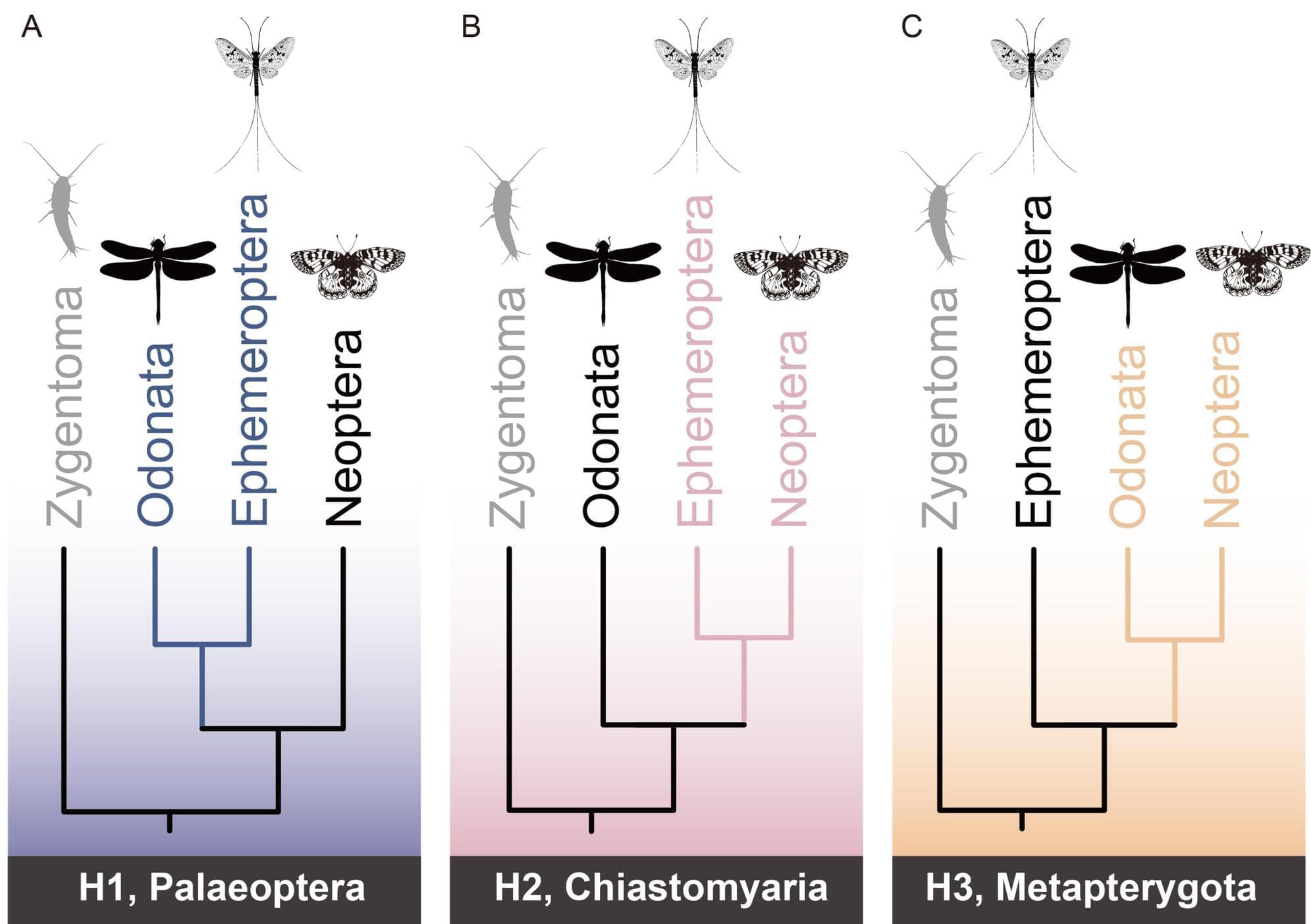
A new study combining genomic analyses and fossil evidence sheds light on the century-old “Palaeoptera Problem,” a longstanding debate over the evolutionary relationships among major groups of winged insects.
The findings, published in Proceedings of the National Academy of Sciences on Oct. 12, support the hypothesis that mayflies (Ephemeroptera) and dragonflies and damselflies (Odonata) form a single evolutionary group, Palaeoptera, which is the sister group of Neoptera, the lineage comprising insects capable of folding their wings over their bodies.
The study, conducted by Cai Chenyang’s team from the Nanjing Institute of Geology and Palaeontology of the Chinese Academy of Sciences (NIGPAS) and professor Zhou Changfa’s team from Nanjing Normal University, reconstructs the early evolutionary history of winged insects and provides new estimates for when their major lineages emerged.