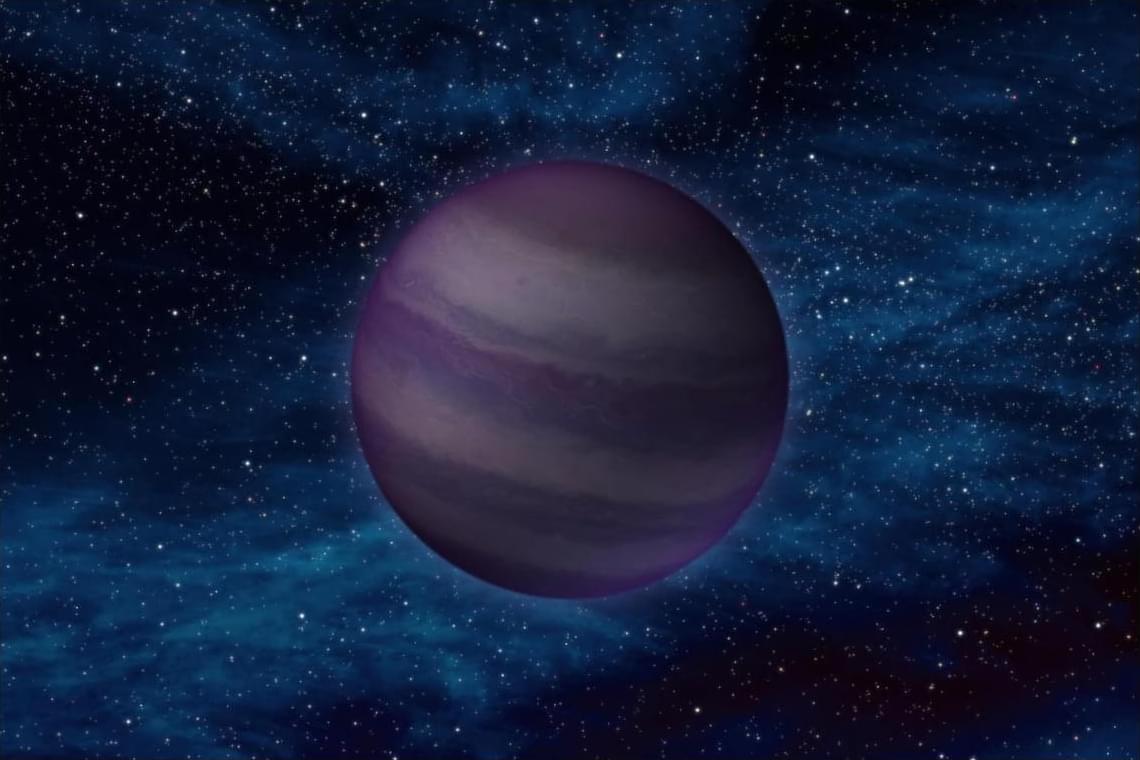
A world with no sunrise still has changing skies, and Webb has caught its water clouds thickening and thinning just 7.5 light-years away.
Astronomers have tracked weather on WISE 855, the coldest known brown dwarf, using the James Webb Space Telescope. A team led by Brittany Miles of the University of Arizona’s Steward Observatory watched the Jupiter-sized object for 11 hours, recording a spectrum of its light every 15 minutes. Those observations allowed researchers to distinguish shifting water clouds from gases carried upward by heat deep inside the atmosphere.
The findings, published in The Astrophysical Journal, provide the most detailed time-series view yet of this frigid neighbor. They also offer the first direct confirmation that water clouds on another world change thickness over time, a familiar feature of weather on Earth.