Despite being known for more mundane uses such as sticking notes to refrigerators or keeping bags shut, magnetization is one of the most fundamental and useful properties of a material. Indeed, it forms the physical basis for storing most of our digital information, encoding the bits used in hard drives, computer memories and credit cards.
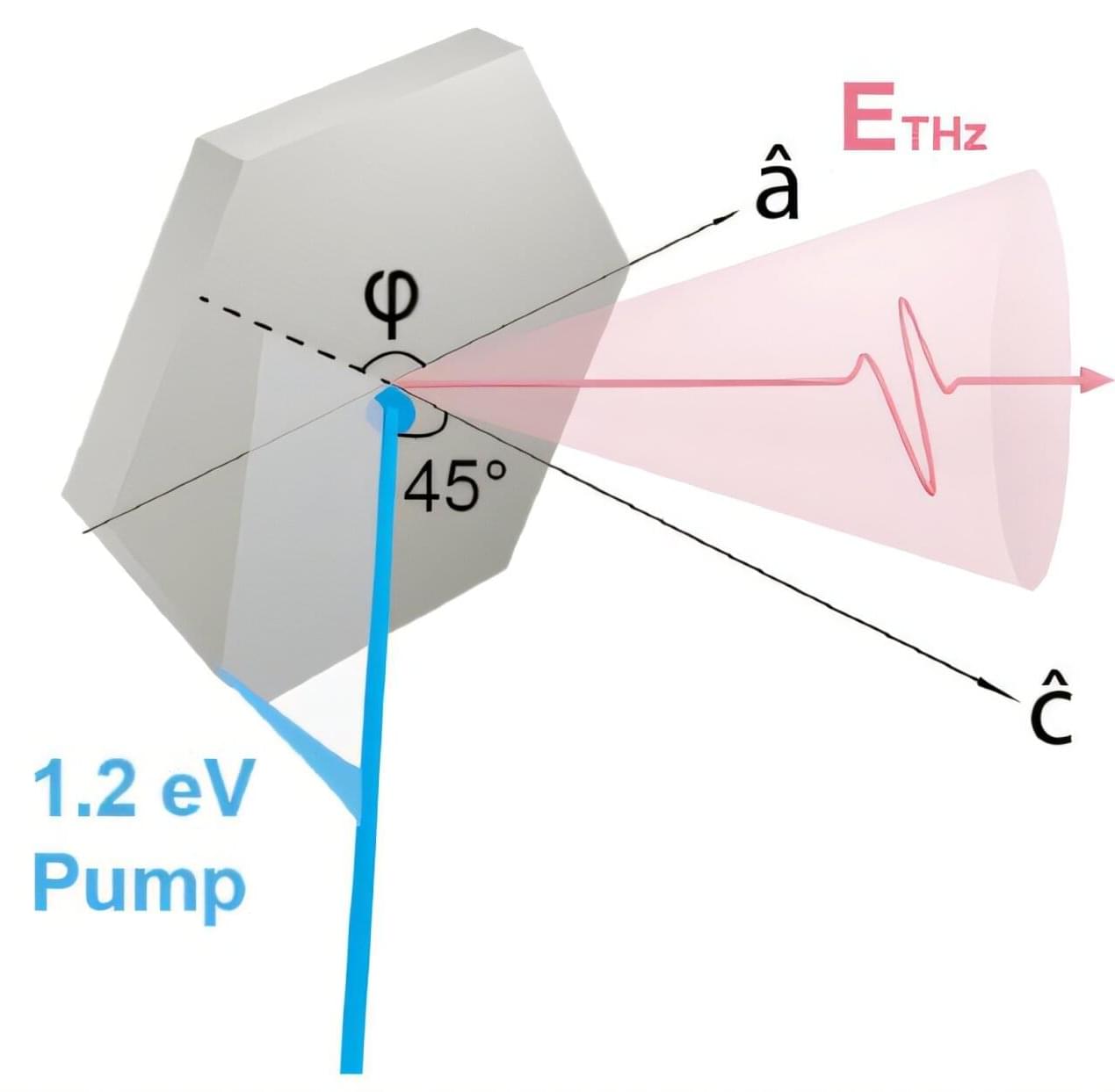
In a new study published in the journal Nature Communications, Illinois researchers have found a noninvasive way to control magnetization on the order of trillionths of a second in the ferromagnetic semiconductor chromium germanium telluride (Cr₂Ge₂Te₆, or CGT). Their technique uses ultrafast laser pulses to steer CGT’s magnetization around in time, taking advantage of an effect that couples its conduction electrons to its magnetic states.