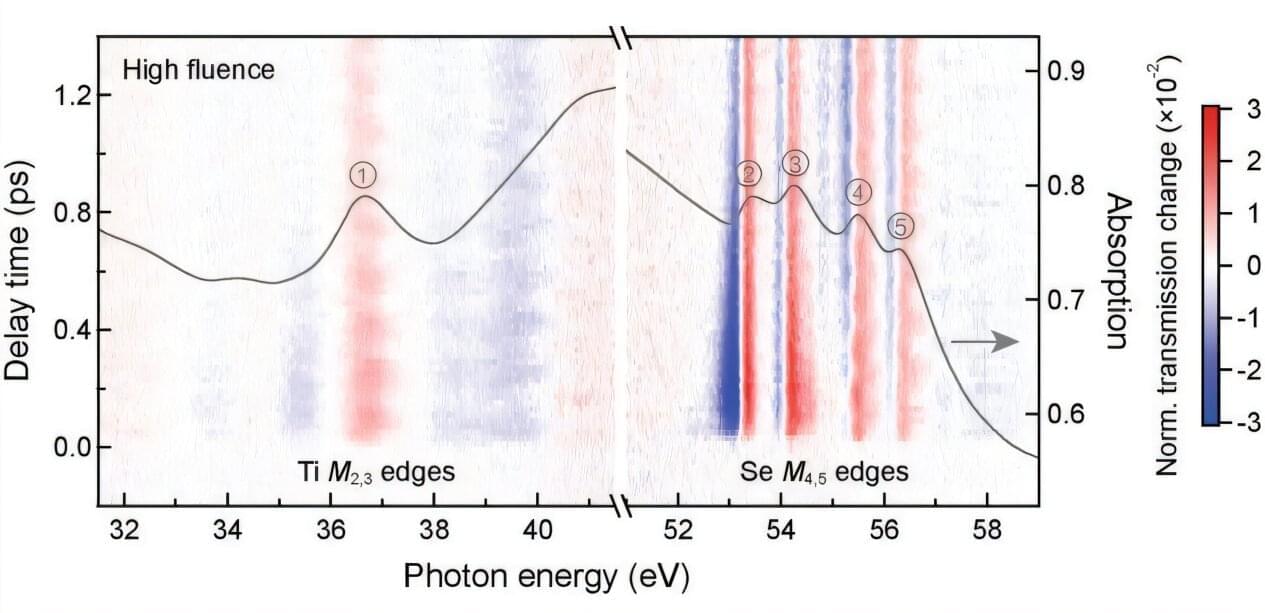
Many fascinating phases in quantum materials emerge when electrons, atoms and other microscopic components begin to act collectively. But these phases do not necessarily appear out of nowhere when a material crosses a transition temperature. Before long-range order develops, microscopic fluctuations can already be present.
Understanding these precursor fluctuations is important because they can tell us which interactions are responsible for driving a material toward an emergent phase. However, the difficulty is seeing them.
Most experimental signatures of phase transitions are easiest to recognize once long-range order has already formed. For example, we can look for a new periodic structure in a diffraction experiment. However, fluctuations that precede this order are transient and lack the same well-defined spatial pattern, making them much harder to measure directly.