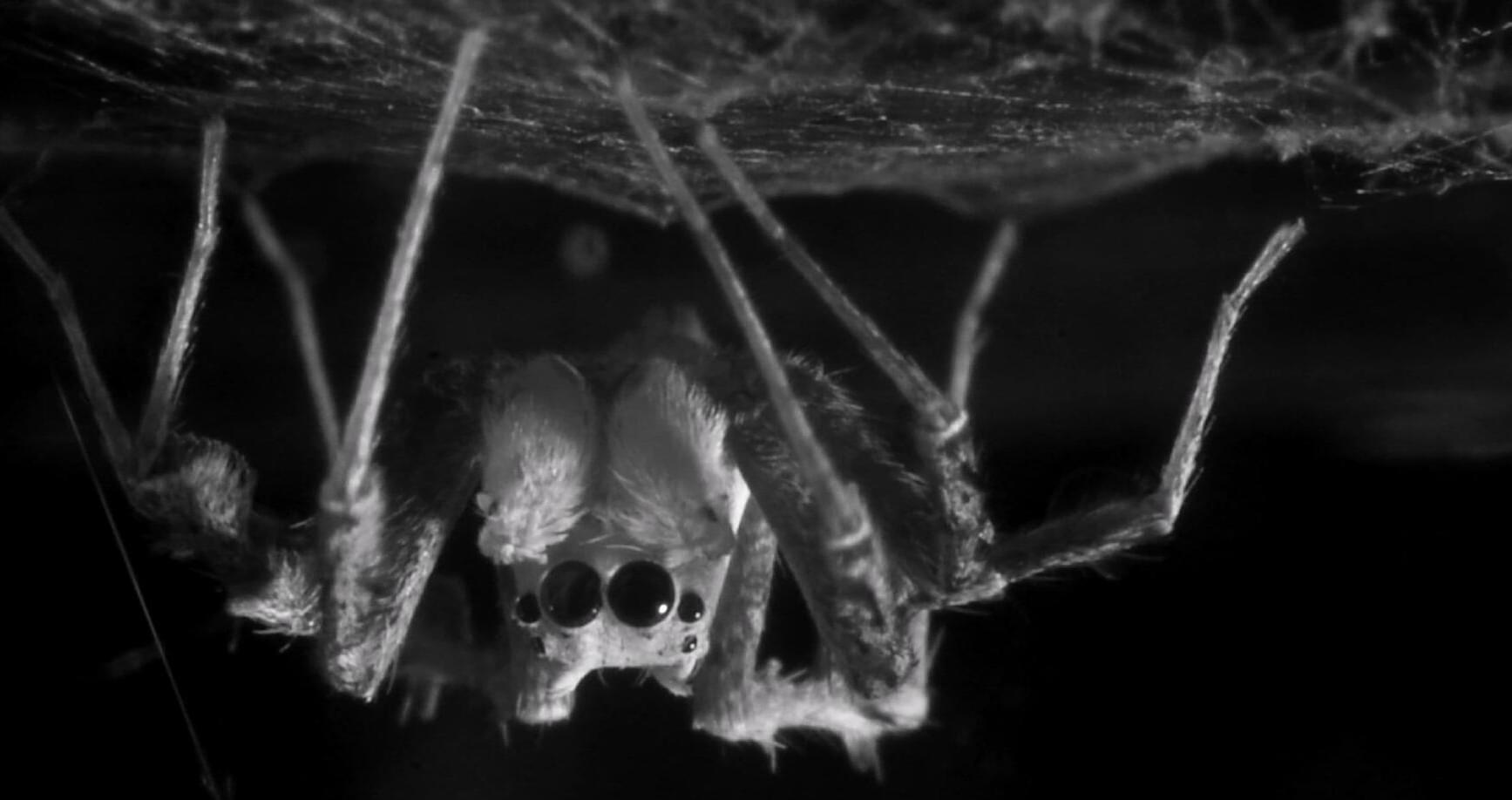
Humans and other vertebrates go through various stages of sleep, including REM (rapid eye movement) sleep characterized by rapid eye movements and muscle twitches. Can a similar sleep state be observed in spiders? Researchers from the Institute of Organismic Biology at the University of Bonn investigated this in the Australian jumping spider Portia fimbriata. The work is published in the journal Proceedings of the National Academy of Sciences.
The researchers investigated whether spiders actually sleep—and whether, like humans and other animals, they go through different stages of sleep. To do this, they recorded the behavior of the Australian jumping spider Portia fimbriata in high resolution over several days and nights and conducted experimental tests. What is known about sleep comes almost exclusively from vertebrates. Until now, experimental evidence for true sleep behavior in spiders was lacking.
Species of the genus Portia feed on other spiders. Their diverse hunting strategies are often interpreted as a sign of intelligence: for example, they mimic the vibrations of wriggling insects caught in the web to attract web-building spiders. Their sophisticated hunting behavior suggests special learning abilities. That’s what makes this spider so interesting. The Australian jumping spider Portia fimbriata, which the researchers studied, is about the size of a one-euro coin when fully grown.