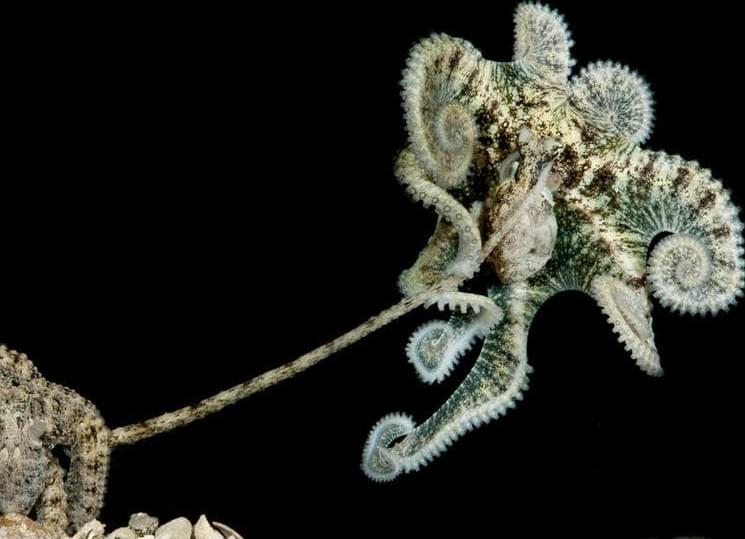
The specialized arm that male octopuses use for mating is also a sensory organ that can detect the ovarian hormone progesterone, according to a recent Science study.
The researchers say the dual-purpose organ offers an example of how sensory adaptations may shape reproductive behavior in ways that can contribute to speciation.
Octopuses use the same system for sensing food or a mate, which has implications for speciation.
Anna Di Cosmo Authors Info & Affiliations
Science
Vol 392, Issue 6793