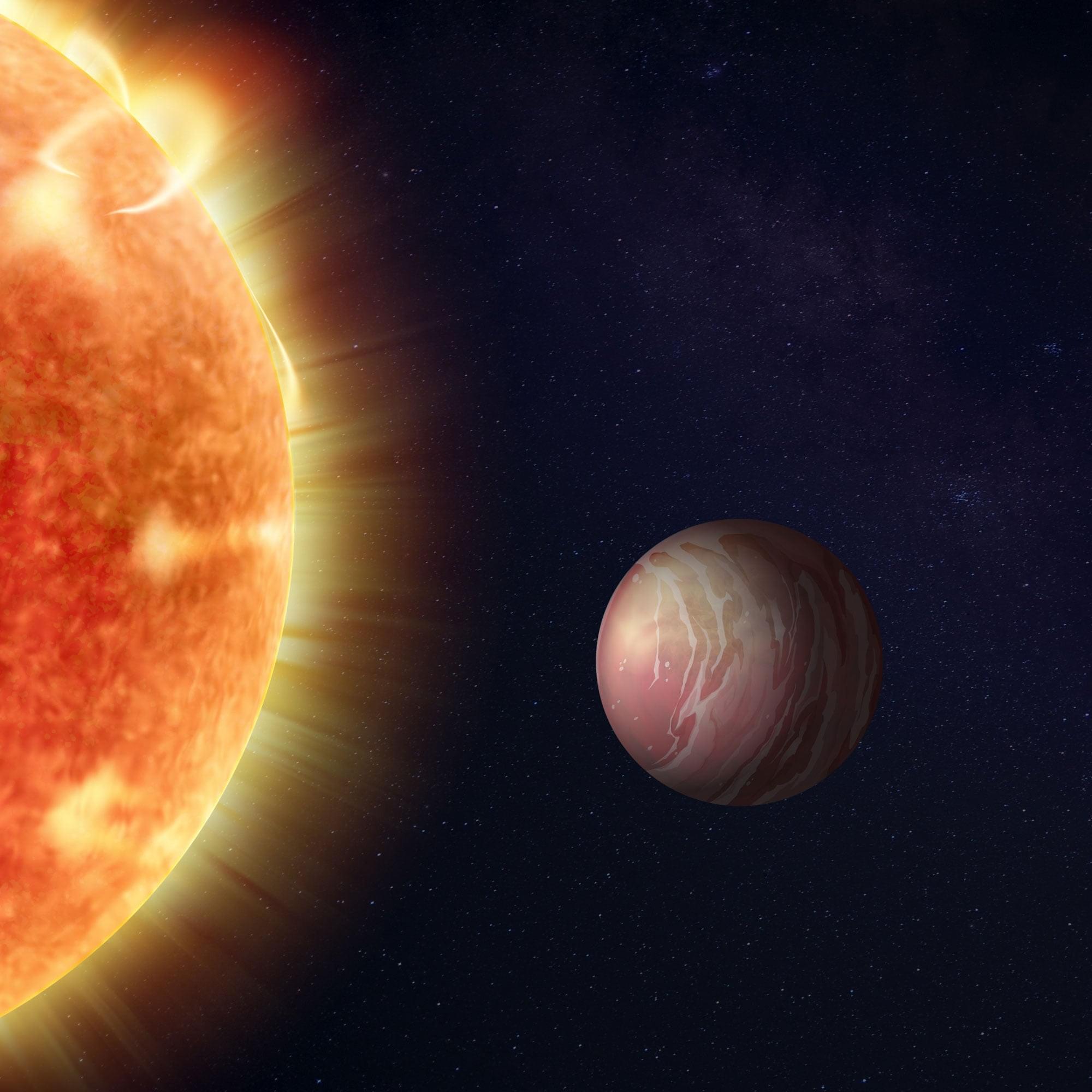
James Webb Space Telescope observations suggest that exotic mineral clouds may be shielding a distant lava planet from its star.
A rocky planet exposed to extreme heat from its star appears to reflect nearly three-quarters of the starlight that reaches it. Astronomers suspect silicate-mineral clouds could act as a protective sunscreen, helping the planet maintain temperatures far below those expected for an exposed surface of molten rock.
The planet, TOI-561 b, lies about 280 light-years from Earth and was previously considered too hot to retain a substantial atmosphere. New observations from the James Webb Space Telescope (JWST) suggest that it has a significant envelope of gas that reflects incoming radiation and redistributes heat around the planet. The findings, published in The Astronomical Journal, challenge existing theories about how atmospheres survive on intensely irradiated rocky worlds.