AI can now imitate the great artists so well that we often can’t tell the difference. But imitation is not creation. Philosopher of aesthetics Derek Matravers argues that a painting without intention is not art at all. When we engage with a painting merely for its beauty, the maker’s identity might not matter. But art does more: it connects us to another mind, to an artist’s deliberate creation of meaning. A human artist stakes something on each decision; an AI stakes nothing, merely averaging out its training data. It might make some beautiful objects, but they are empty of the meaning that we seek in art.
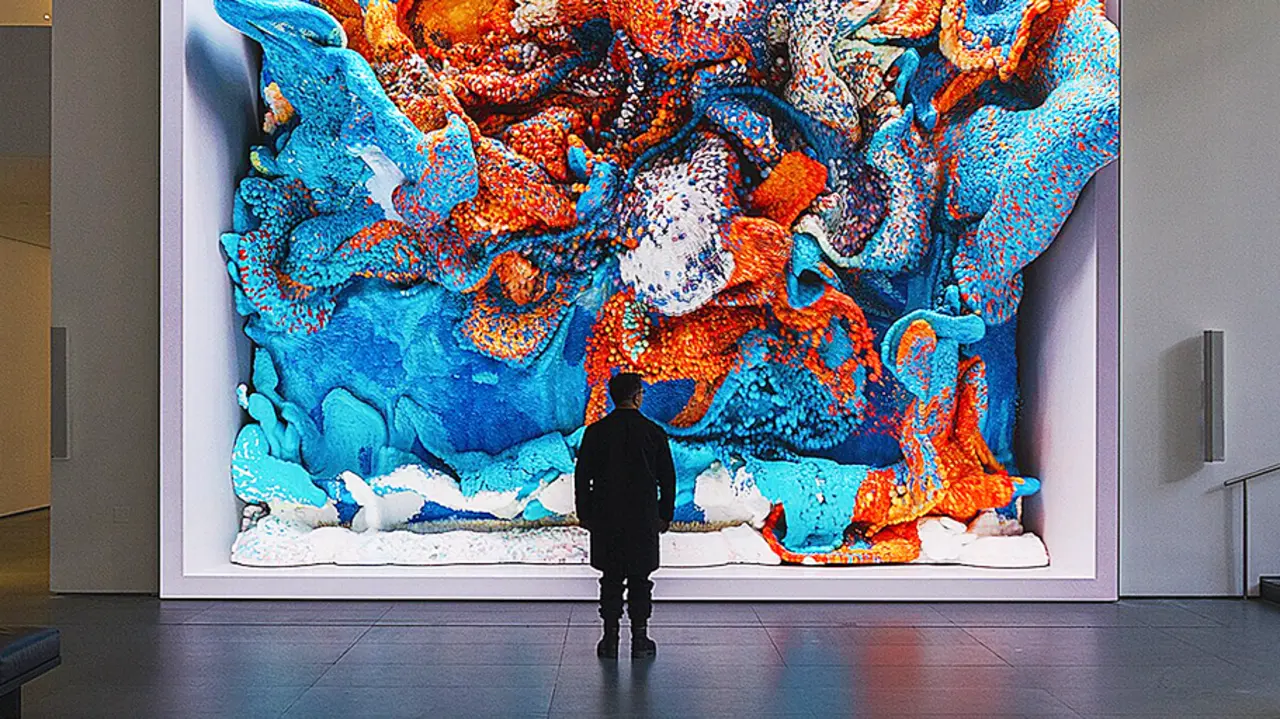
Can AI produce art? The question is not as simple as it might seem. Certainly, AI has played a large part in the production of works of art. The Turkish-American artist, Refik Anadol, has won international acclaim for some spectacular pieces of visual art generated by AI. But was it Anadol who produced these using AI akin to Titian producing his paintings using a paintbrush? Or was it AI who produced these? If consciousness is necessary for creativity, and AI lacks consciousness, then AI lacks creativity. And if creativity is necessary to produce art, then AI could not have produced the works and those works still be art. These and other questions are generating a rich and interesting debate in universities and academic journals across the world.
Where one stands on these matters will depend on where one stands on the broader issues that structure the debate. There is no point in asking whether AI can produce art if one does not know what art is. The same might be true for other concepts that feature in the debate, such as intentions, creativity, meaning and so on. It also helps to know about how the various systems (in particular, the image-generating systems such as DALL-E, Midjourney, and Stable Diffusion) work. I am going to start at a rather more practical level. AI can produce works that have the appearance of works of art in all media. It can produce complex narrative works, complex musical works, and complex images. Judged purely on qualities associated with the medium (say, narrative, musical, or visual complexity) some of these works are above the quality most of us could achieve if we tried it ourselves.