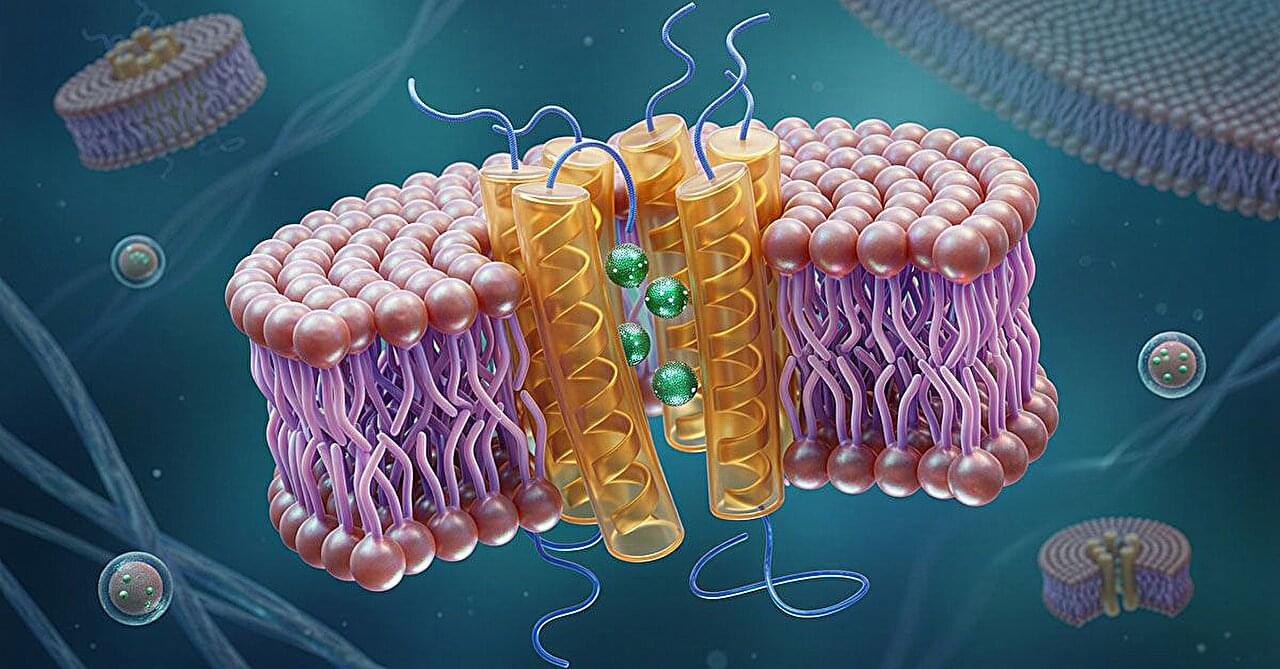
Scientists have long been interested in cellular nanodiscs, tiny particles made from natural cell membranes that mimic many of the functions of living cells. While previous studies demonstrated the therapeutic potential of nanodiscs for drug delivery, detoxification and vaccines, one fundamental question remained unanswered: How does size influence how well they work?
Researchers from the University of California San Diego have discovered that size has more of an impact than scientists once realized. Shrinking cellular nanodiscs dramatically improves their ability to bind biological targets and neutralize harmful bacterial toxins. The findings, recently published in the journal Small, establish new design principles that could help scientists build more effective nanomedicines by combining laboratory experiments with high-performance computing.
The interdisciplinary research effort included Halıcıoğlu School of Data Science and Computing affiliates Liangfang Zhang and Kesong Yang, who are professors in UC San Diego’s Aiiso Yufeng Li Family Department of Chemical and Nano Engineering. The study paired experimental biology with computer simulations, using National Science Foundation (NSF) ACCESS allocations on the San Diego Supercomputer Center (SDSC) Expanse system to uncover why particle size has such a profound effect on biological performance.