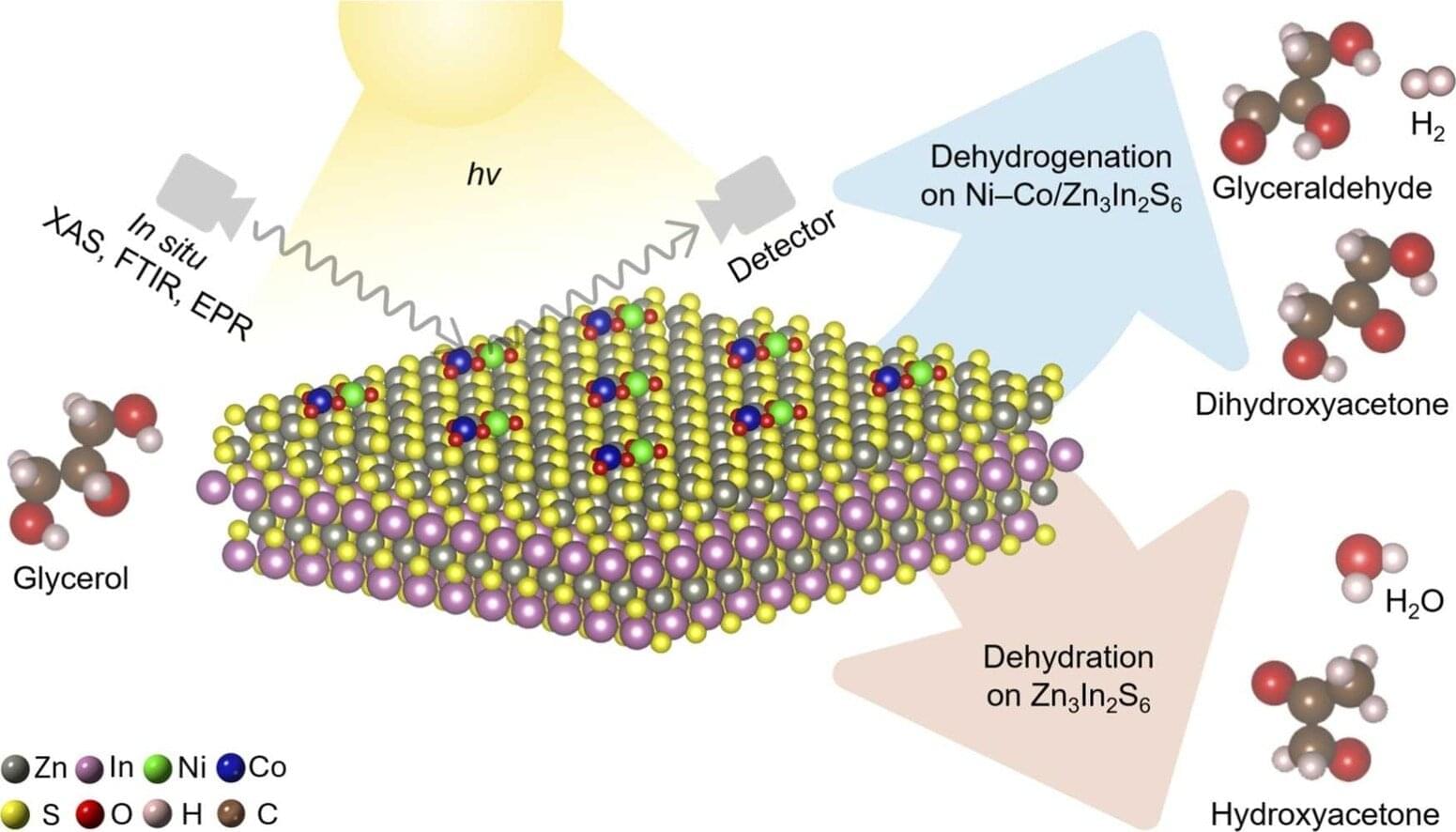
Australian researchers and international collaborators have demonstrated a solar-driven approach to convert glycerol, a low-value byproduct of biodiesel production, into hydrogen and higher-value chemicals. Using advanced techniques at the Australian Synchrotron, they revealed how the catalyst changed while it was working.
The study, led by researchers at the University of New South Wales, investigated a process known as photoreforming, in which light energy is used to drive chemical reactions to simultaneously produce hydrogen and transform organic feedstocks into useful products. The research was published in Applied Catalysis B: Environment and Energy.
Glycerol is produced in large quantities by the growing biodiesel industry, with approximately 100 kilograms (220 pounds) generated for every ton of biodiesel. Crude glycerol can be worth as little as US$0.11 per kilogram. Chemicals can be produced from it, such as glyceraldehyde and dihydroxyacetone, which have applications in the chemical and pharmaceutical industries and are valued at approximately US$75 and US$150 per kilogram, respectively.