Four years ago I asked PJ Manney a question I still can’t shake: what happens when the story we tell ourselves about who we are stops working?
PJ wrote for Hercules and Xena before she became a Philip K. Dick Award-nominated novelist. She has spent her career inside the machinery of narrative, so when she says we need a New Mythos, she’s not speaking metaphorically. She means it as a survival requirement.
Back in early 2022, we spent two hours on story, science, and the gaps between them. Jonah Sachs calls those gaps “myth gaps,” the moments when the old narrative collapses, and nothing has replaced it yet. We were already living in one. Then generative AI arrived and started producing stories at industrial scale.
So the question got sharper, not softer. If machines can write the stories, who writes the Story?
PJ has an answer. So does Teilhard de Chardin, oddly enough. I’m not sure they agree, and I’m not sure I agree with either of them.
This is the second conversation in my series on #storytelling and what I call ReWriting the Human Story. PJ also explains why something “yucky” today becomes “yummy” tomorrow, and why #sciencefiction is how that happens. That alone rewired how I think about #AI adoption.
Story is to us what water is to fish. Worth noticing before someone else decides what’s in the water.
Full 2-hour conversation with PJ Manney on the New Mythos, (CON)Science, and why story is both the poison and the cure: [ https://snglrty.co/3XMYg1f](https://snglrty.co/3XMYg1f)
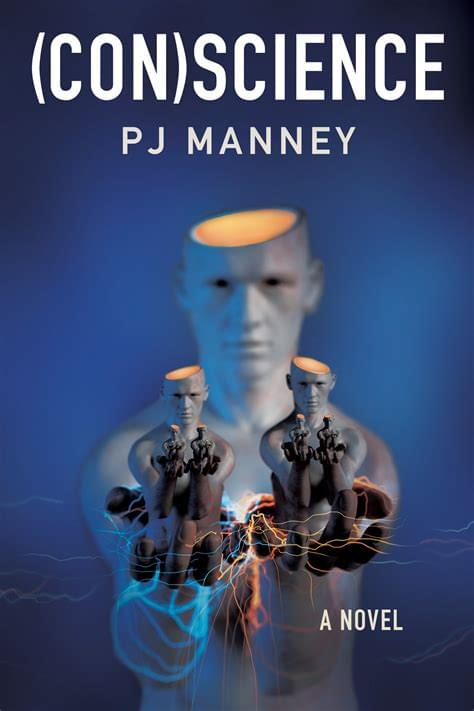
Sci-Fi Author PJ Manney talks about the New Mythos and the last book of her Phoenix Horizon Trilogy — (CON)Science.
Humanists in academia have been rewriting and edting human history for hundreds of years.